

What Should I Look for When I Visit My Parent in a Nursing Home Over the Holidays?
Quick answer: Look at your loved one first: weight, skin, hygiene, mood, and how alert they are compared with your last visit. Then look at the room and the unit: whether water is within reach, whether belongings are missing, how long call lights stay on, and how many staff are on the floor. Write down what you see, with dates and names, before you leave the parking lot. If something worries you, ask for a care plan meeting, and if it is serious, report it to the California Department of Public Health or the Long-Term Care Ombudsman.
The holidays bring more families through nursing home doors than any other time of year. Some relatives are seeing a parent for the first time in months, and that gap is useful. You will notice changes that people who visit every day have stopped seeing.
This checklist is meant to make one visit count. It is not a reason to spend the afternoon inspecting the building. Most of it you can do while you sit, talk, and share a meal.
Before You Go
Call ahead and ask what is planned for the day, especially if you want to join a holiday meal or take your loved one out. A few things are worth knowing before you arrive.
You have a right to visit. Federal rules say a nursing home resident can receive visitors of their choosing at the time of their choosing, and the facility must give immediate family immediate access, subject to the resident's own right to say no. That is in 42 CFR 483.10(f)(4). California's patient rights regulation, Title 22, section 72527, adds a right to privacy during visits with family and friends. A facility can set reasonable clinical and safety limits, but "it's a busy day" is not one of them. Our guide to California nursing home residents' rights covers the rest.
If you plan to bring your parent home for a meal or an overnight stay, ask about the bed-hold policy. Before a resident goes on therapeutic leave, federal rules require the nursing home to give written information about how long the bed will be held and the facility's policy on returning, under 42 CFR 483.15(d). Get it in writing before you leave.
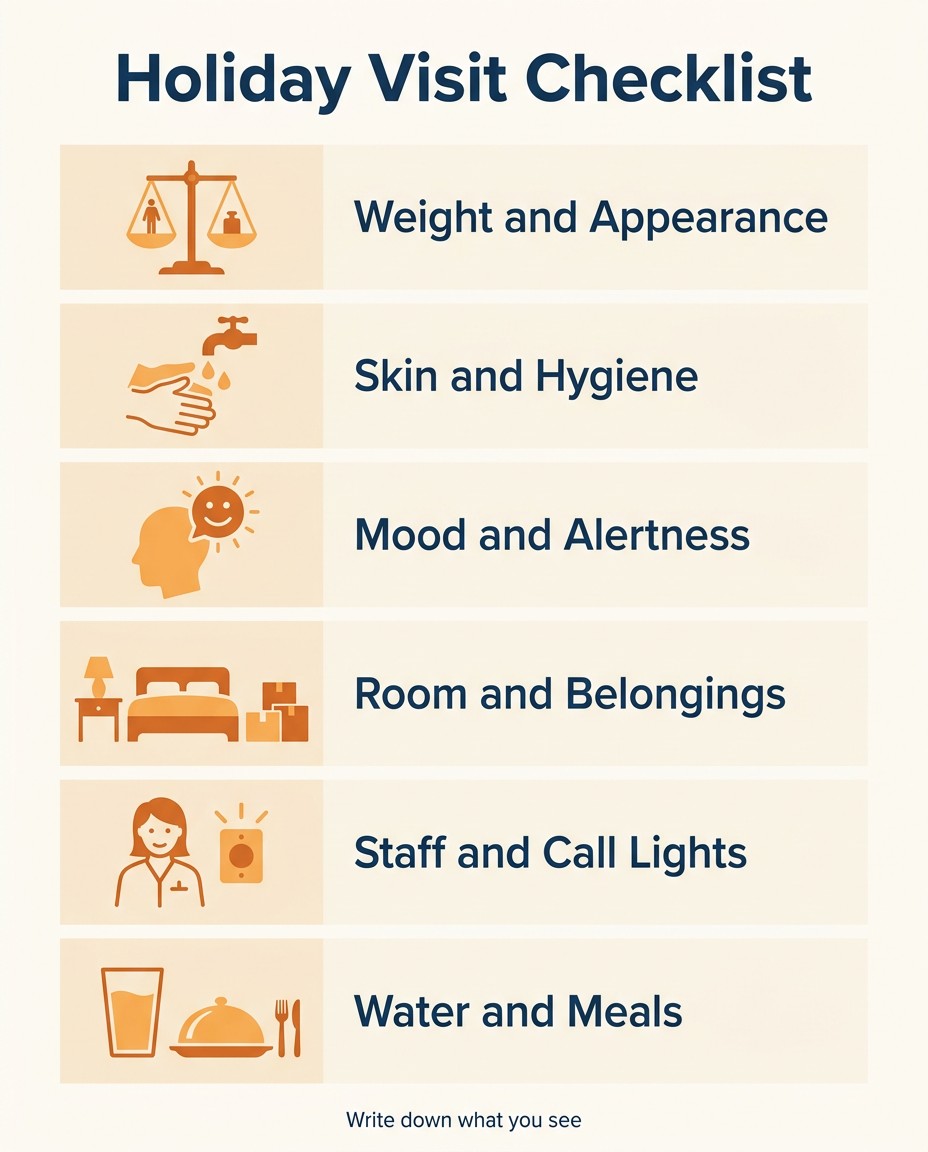
The Checklist: Six Things to Notice
1. Weight and Appearance
Look at your loved one's face, hands, and clothes. Loose clothing, a thinner face, or a belt on a new notch can mean weight loss. Dry lips and a dry mouth can point to dehydration. Unexplained weight loss and dehydration are two of the most common signs of nursing home neglect, and they often trace back to residents who need help eating and do not get it. See our page on dehydration and malnutrition.
2. Skin and Hygiene
Notice whether your parent is clean, shaved or groomed the way they like, in fresh clothes, and free of odor. If you help with a sweater or a blanket, look for bruises, skin tears, or redness on the heels, hips, elbows, and tailbone. Redness that does not fade can be an early pressure injury. Our bedsores page explains how these start and why they are usually preventable.
3. Mood and Alertness
Compare the person in front of you with the person you saw last time. A parent who was chatty and is now withdrawn, fearful around certain staff, or unusually sleepy deserves a question. Heavy sedation can be a sign of a medication error or of drugs used to keep a resident quiet. Fear or flinching can point to emotional abuse. Your parent may not tell you directly, so pay attention to how they react when staff walk in.
4. Room and Belongings
Look for a water cup within reach, a call button your parent can reach and use, a clean bed, and walkways clear of clutter. Check that glasses, hearing aids, and dentures are there and being used. Ask about any new bruise or injury, and ask whether there has been a fall. A fall that nobody mentioned is worth following up on with our page on falls and fractures.
Holiday gifts are worth a note too. California requires nursing homes to keep a written inventory of each resident's personal property, and the facility must add items brought in later when the resident or family asks in writing, under Health and Safety Code section 1289.4. The facility is not liable for items nobody asked to have added. If you bring a tablet, a watch, or a new robe, put a written request in at the front desk. Under section 1289.3, a facility that fails to make reasonable efforts to safeguard resident property must replace it or pay its current value.
5. Staff and Call Lights
Holiday weeks are often short-staffed, which makes them a fair test. Notice how long call lights stay on down the hall, how many aides you pass, and how they speak to residents. If you cannot find anyone to help during your visit, think about what happens at night. Our post on California nursing home staffing requirements explains the minimums facilities are supposed to meet.
6. Water and Meals
If you can, stay for a meal. Watch whether your parent gets help with eating when they need it, whether the food arrives at a temperature they can eat, and whether the tray goes back full. A resident who needs help and does not get it will lose weight quickly.
Questions to Ask Before You Leave
Stop by the nurses' station on your way out. You do not need to be confrontational. Short, specific questions work best:
- Has there been any fall, injury, or hospital trip since my last visit?
- Has my parent's weight changed, and is anyone tracking how much they eat and drink?
- Have any medications been added or changed?
- When is the next care plan meeting, and can I attend?
That last question matters. Federal rules require each resident's care plan to be prepared by a team that includes, to the extent practicable, the resident and the resident's representative, under 42 CFR 483.21(b). California's section 72527 also gives patients the right to take part in their plan of care. A care plan meeting is the right place to raise what you saw.

Write It Down Before You Drive Home
Memory fades fast after a long holiday day. Before you leave the parking lot, write down the date and time of your visit, what you saw, what your parent said, and the names of the staff you spoke with and what they told you. Take photos of any injury, with your parent's permission. A dated note written that day is far more useful later than a recollection pieced together weeks afterward.
If you are one of several siblings visiting over the holidays, compare notes. One person might catch the weight loss, another the new bruise, another the unanswered call light. Together, those notes can show a pattern.
What to Do If Something Is Wrong
If your loved one is in danger, call 911. For everything else, match the step to the problem:
- For a care concern, raise it with the charge nurse or director of nursing, and ask for a care plan meeting.
- For a problem the facility will not fix, call the Long-Term Care Ombudsman, a free, confidential advocate for residents. You can find the local office on the California Department of Aging's ombudsman page.
- For suspected abuse or neglect, file a complaint with the California Department of Public Health. Our guides on how to file a complaint against a California nursing home and how to report nursing home abuse in California walk through each step.
You can look up a facility's inspection history in our California nursing home directory. California also lets a resident or the resident's representative sue a nursing home that violates the resident's rights under Health and Safety Code section 1430(b).
Talk With Us If Your Loved One Was Hurt
A holiday visit should be a good day. If it showed you that something has gone wrong, such as a fall, a pressure injury, sudden weight loss, or a parent who seems afraid, you do not have to sort it out alone. If nursing home neglect has hurt someone you love, call (888) 999-0169 or send us a message. When you contact us, we talk with you about what happened. The consultation is free, and you pay nothing unless we win.
Frequently asked questions
Can a California nursing home limit my holiday visit?
A facility can set reasonable clinical and safety limits, and your parent can decline a visit. Otherwise, federal rules give residents the right to receive visitors of their choosing at the time of their choosing, and California's rules give them privacy during visits.
Can I take my parent out of the nursing home for a holiday meal?
Usually, yes, if their doctor and care team agree it is safe. Before a resident goes on leave, the nursing home must give written information about its bed-hold policy, so ask for it and read it before you go.
What if a gift I brought goes missing?
Report it to the facility in writing. California nursing homes must keep a theft and loss program and a personal property inventory, and items added to the inventory at the family's written request are covered. A facility that fails to make reasonable efforts to protect a resident's property must replace it or pay its value.
Should I tell staff that I am checking on my parent's care?
You do not need to announce it. Ask your questions calmly, keep your own notes, and save formal complaints for problems the facility does not fix or for suspected abuse or neglect.

Confidential. No obligation. Available 24/7.