

Are Nursing Homes Required to Prevent Falls in California?
Quick answer: Yes. Federal rules that California applies to every skilled nursing facility require each home to keep the environment as free of accident hazards as possible and to give each resident adequate supervision and assistance devices to prevent accidents. That means assessing every resident's fall risk, building a written care plan around it, following that plan on every shift, and updating it after any fall. California also requires enough staff and a working call light within the resident's reach. Not every fall is negligence, but a fall that the plan should have prevented often is.
Falls are among the most common reasons families call us. Usually the call starts the same way: "The nursing home says she just fell." Sometimes that is true. Older adults fall even with good care. But when we worked on the defense side, the first thing we pulled after a fall was the resident's fall risk assessment and care plan, because that is where most fall cases are won or lost. Families can look at the same things, and they do not have to wait until after an injury to do it.
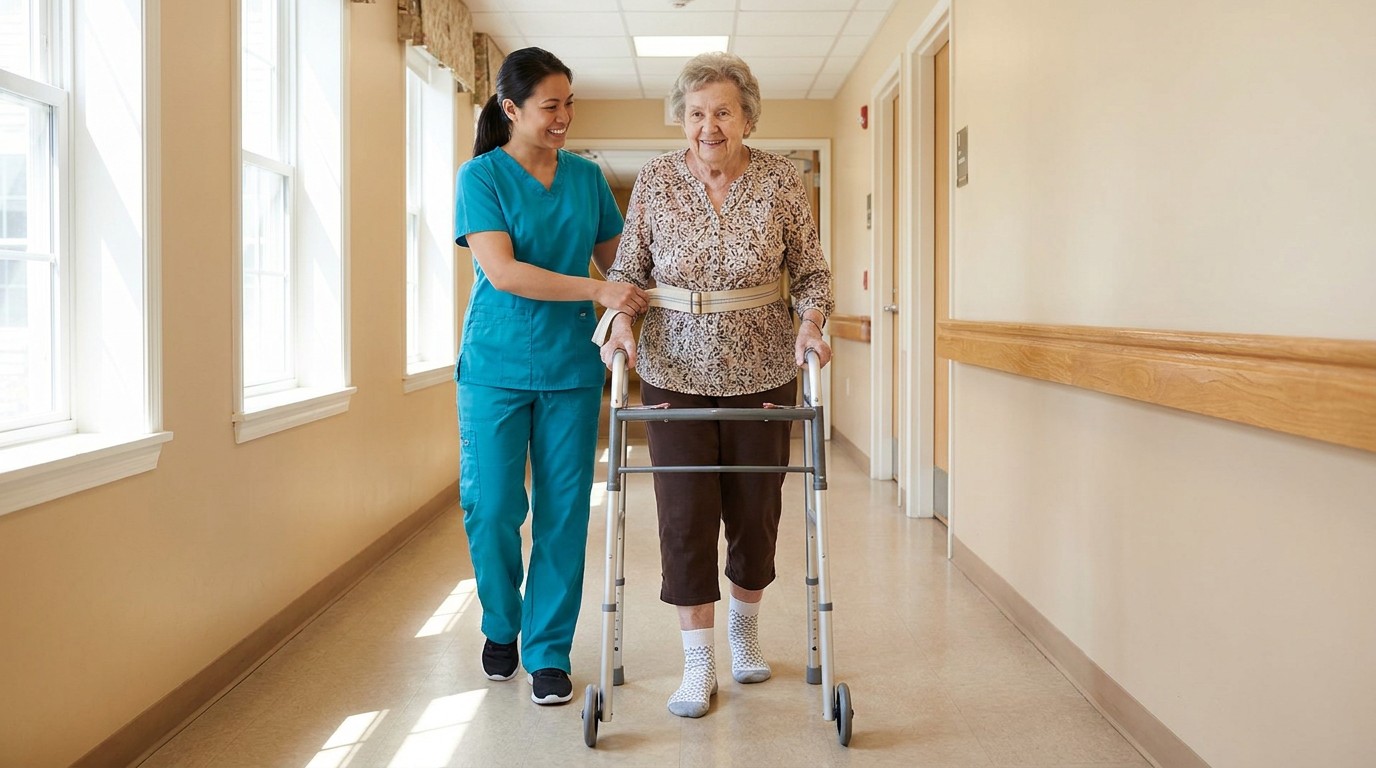
What the Law Requires
The core rule is federal. Under 42 CFR 483.25(d), a facility must ensure that the resident environment remains as free of accident hazards as is possible, and that each resident receives adequate supervision and assistance devices to prevent accidents. Inspectors cite violations of this rule under a deficiency tag known as F689, and you may see that tag in a facility's inspection reports.
California does not leave this to Medicare. Health and Safety Code section 1599.1 applies the core federal resident protections to California facilities regardless of how a resident pays. The same statute requires enough qualified staff and a nurse call system that works, with the cord within the resident's reach. A call light clipped to the wall across the room breaks that rule.
Three other rules shape fall prevention:
- Care planning. Under 42 CFR 483.21, every resident must have a comprehensive, person-centered care plan built from a standardized assessment. A resident who has fallen before, takes sedating medications, has dementia, or needs help walking should have specific fall interventions written into that plan.
- Bed rails. Federal rules require facilities to try appropriate alternatives before installing a side rail, assess the resident for entrapment risk, get informed consent, and follow the manufacturer's instructions. Rails are not a fall prevention shortcut, and they can cause serious injuries of their own.
- Restraints and sedation. California's patient rights in Title 22, section 72527 prohibit physical restraints and psychotherapeutic drugs used for staff convenience. A facility cannot solve a fall risk by tying a resident to a chair or sedating them into stillness.
Staffing sits underneath all of it. Supervision is measured in staff hours, and California's minimum direct care staffing requirement is a floor, not a guarantee. Our post on California nursing home staffing requirements explains how to check a facility's real numbers.
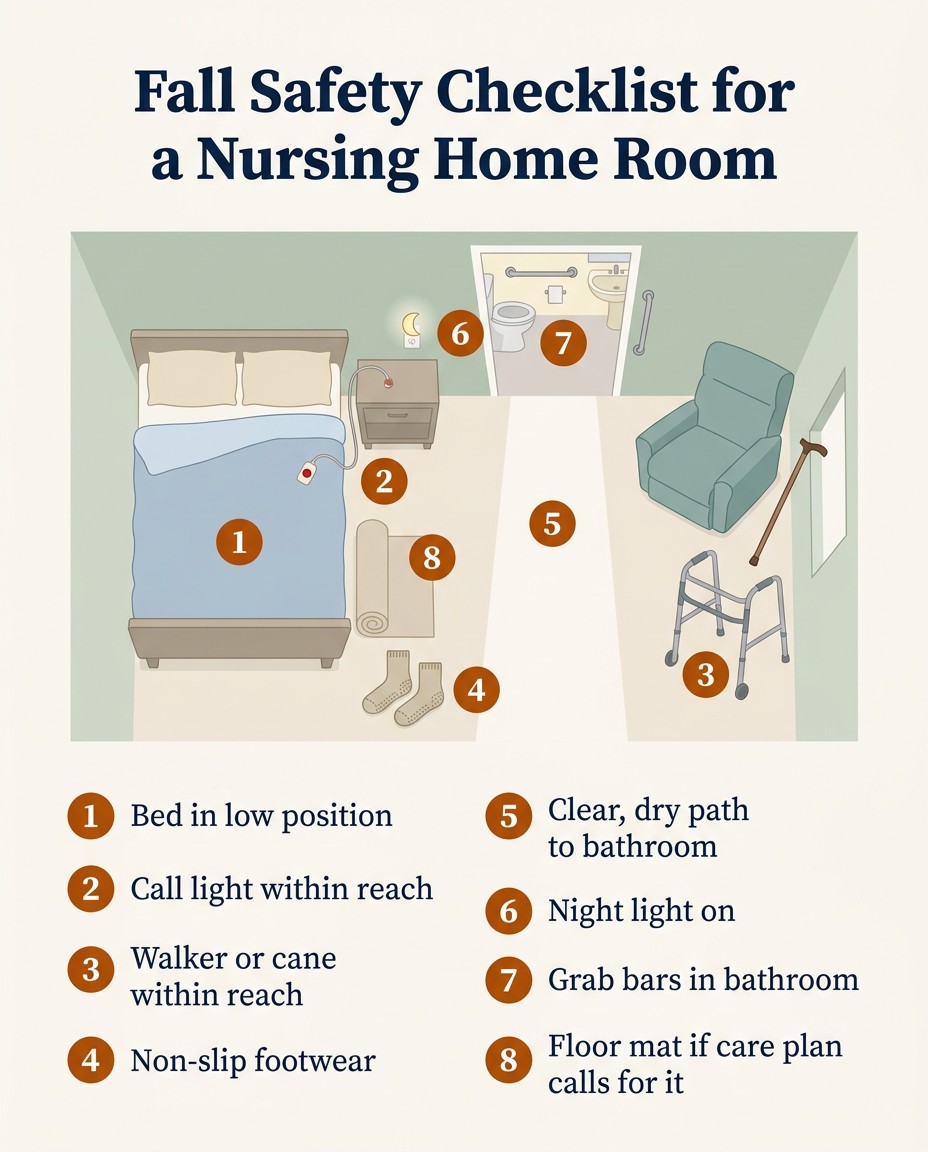
What a Real Fall Prevention Plan Looks Like
A good plan is specific to the person. "Fall precautions" written in a chart means nothing on its own. A meaningful plan usually includes:
- A risk assessment at admission, repeated at regular intervals, after any significant change in condition, and after every fall.
- A toileting schedule. Many falls happen when a resident gets up alone to use the bathroom because no one answered the call light. Scheduled help removes the reason to try.
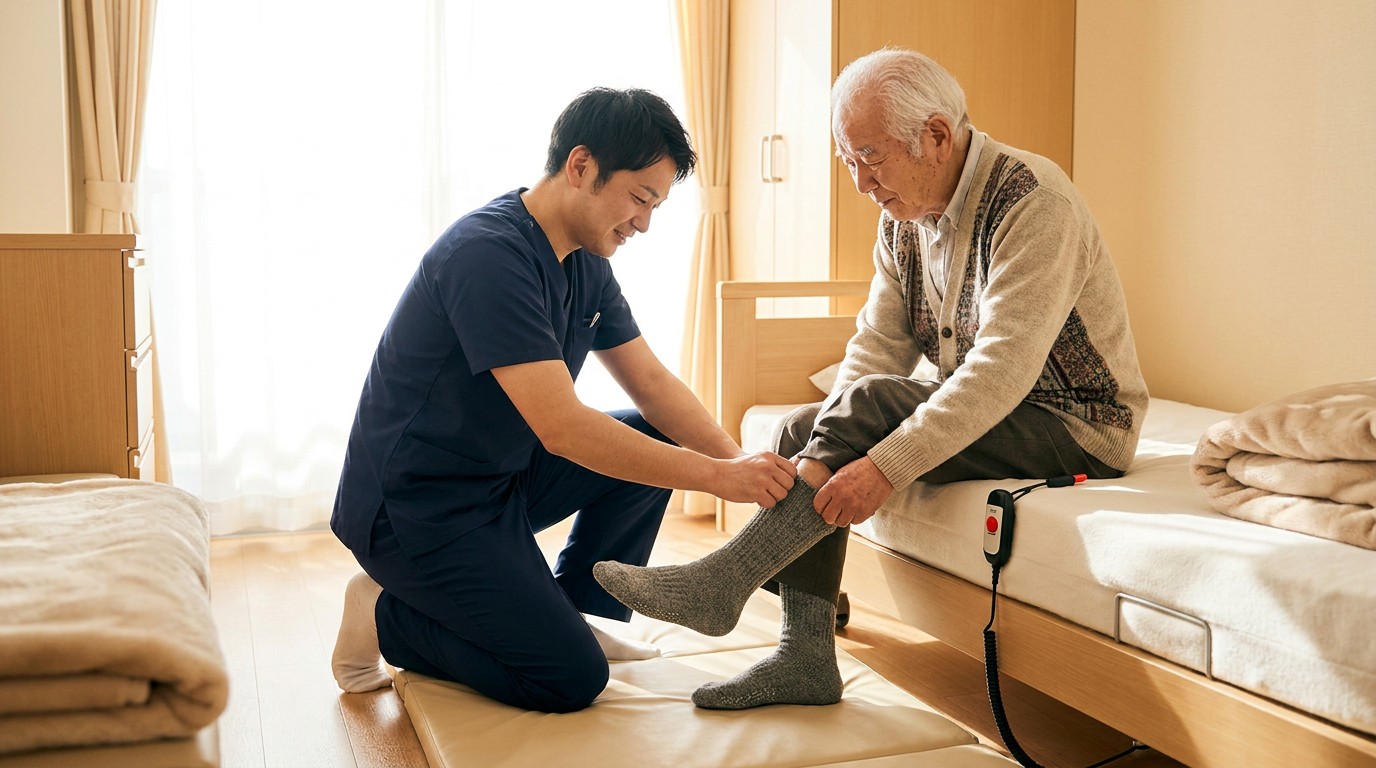
- The right equipment, used consistently: a bed that lowers close to the floor, a floor mat if the plan calls for one, non-slip footwear, a walker or cane within reach, and good lighting at night.
- A medication review. Sedatives, sleep aids, blood pressure drugs, and some antidepressants raise fall risk, and blood thinners make a fall far more dangerous. The pharmacist and physician should look at the whole list. Errors here can also become medication error cases.
- Therapy. Physical therapy for strength, balance, and safe transfers.
- Supervision that matches the risk: more frequent checks, seating near the nurses' station, or one-on-one help with transfers when the resident needs it.
- Two-person transfers or a mechanical lift when the care plan says so. When a plan requires two staff members and one aide does it alone because the floor is short-staffed, a serious injury is often the result.
The Centers for Disease Control and Prevention's STEADI initiative offers more background on fall risk factors in older adults.
What the Facility Must Do After a Fall
After a fall, staff should assess the resident for injury before moving them, and watch them closely afterward, especially for a head strike or a resident on blood thinners. Under 42 CFR 483.10(g)(14), when an accident injures a resident and may require a physician's involvement, the facility must immediately inform the resident, consult the resident's physician, and notify the resident's representative. If you learned about a fracture days later, or from a hospital rather than the facility, that delay matters.
The care plan should then change. A resident who falls twice in the same way, under the same unchanged plan, is a red flag. California also requires facilities to report major accidents and certain other serious occurrences to the state within 24 hours under Title 22, section 72541.
We have written about what a nursing home does in the first 72 hours after an injury, from the defense side. It is worth reading before you sit down with the administrator.
Questions Every Family Should Ask
Bring these to the next care plan meeting, or ask them the day after a fall:
- What is my loved one's current fall risk assessment, and when was it last updated?
- What specific fall interventions are in the care plan right now?
- How often is staff supposed to check on them, day and night?
- Do transfers require one person, two people, or a lift?
- Is there a toileting schedule, and is it being followed?
- Has a pharmacist reviewed their medications for fall risk?
- Is the call light always within reach, and how long does it usually take to be answered?
- After the last fall, what changed in the plan?
Ask for the answers in writing. You have the right to take part in care planning, which we cover in our guide to California nursing home residents' rights.
When a Fall Becomes a Legal Case
A fall alone is not proof of neglect. A fall becomes a case when the facility knew, or should have known, about the risk and failed to do what its own plan, the regulations, or basic good care required. Common patterns include unwitnessed falls by residents assessed as high risk, repeat falls with no change in the plan, one-person transfers of two-person residents, delayed treatment after a fall, and falls that lead to hip fractures, brain bleeds, or death.
Families often ask whether they can sue a care home for a brain injury caused by a fall. In California, the answer can be yes, through negligence claims and, when the neglect was reckless, under the Elder Abuse Act. Our guide to California nursing home neglect laws explains how those claims work, and our falls and fractures page covers the injuries we see most.
If a fall in a California nursing home seriously injured or took the life of someone you love, call (888) 999-0169 or send us a message. When you contact us, we talk with you about what happened. The consultation is free, and you pay nothing unless we win.
Frequently asked questions
What are nursing homes required to do to prevent falls?
Federal rules, which California applies to every skilled nursing facility, require each home to keep the environment as free of accident hazards as possible and to give each resident adequate supervision and assistance devices to prevent accidents. In practice, that means a fall risk assessment, a written care plan with specific interventions, enough staff to carry it out, and updates after every fall.
Is a nursing home liable if my parent falls?
Not automatically. A nursing home is generally liable when the fall resulted from a failure to assess the risk, follow the care plan, provide adequate supervision or assistance, or respond properly after the fall. Repeat falls with no change in the plan, and falls during transfers that required more help, are common examples.
Can I sue a nursing home for a brain injury caused by a fall in California?
Possibly. If the facility failed to take reasonable steps to prevent the fall, or failed to monitor and treat the resident properly afterward, a negligence claim may apply. If the neglect was reckless, the Elder Abuse Act may provide additional remedies. Time limits apply, so it is worth speaking with a lawyer promptly.
Does a nursing home have to tell the family about a fall?
When an accident injures a resident and may require a physician's involvement, federal rules require the facility to immediately inform the resident, consult the physician, and notify the resident's representative.

Free Case Evaluation
Confidential. No obligation. Available 24/7.