

My Loved One Seems Afraid of the Staff: Should I Call a Lawyer?
Quick Answer: Emotional abuse leaves no bruise, and that is exactly why nursing homes get away with it and why families second-guess what they are seeing. Yelling, threats, humiliation, isolation from family, and call lights ignored as punishment are all recognized as elder abuse under California law. If your loved one has become fearful, withdrawn, or agitated around particular staff in a California nursing home, you may have a claim under the state's Elder Abuse Act. Call (888) 999-0169 or send us a message for a free, confidential consultation. You pay nothing unless we win.
When a family raises emotional abuse, the facility's answer is nearly always the same: it is the dementia, it is a personality conflict, the aide is "firm but caring," and there is no injury to point to. We spent years on the defense side of these cases, and we can tell you what the facility's own lawyers know. A resident who stops eating when a certain aide comes on shift, or whose chart suddenly fills with new "behaviors" and a new anti-anxiety prescription, is telling a story the facility would rather nobody read. This page explains what emotional abuse looks like inside a nursing home, what a family can see, how it connects to chemical restraint, what the records should show, and what your family can do about it.
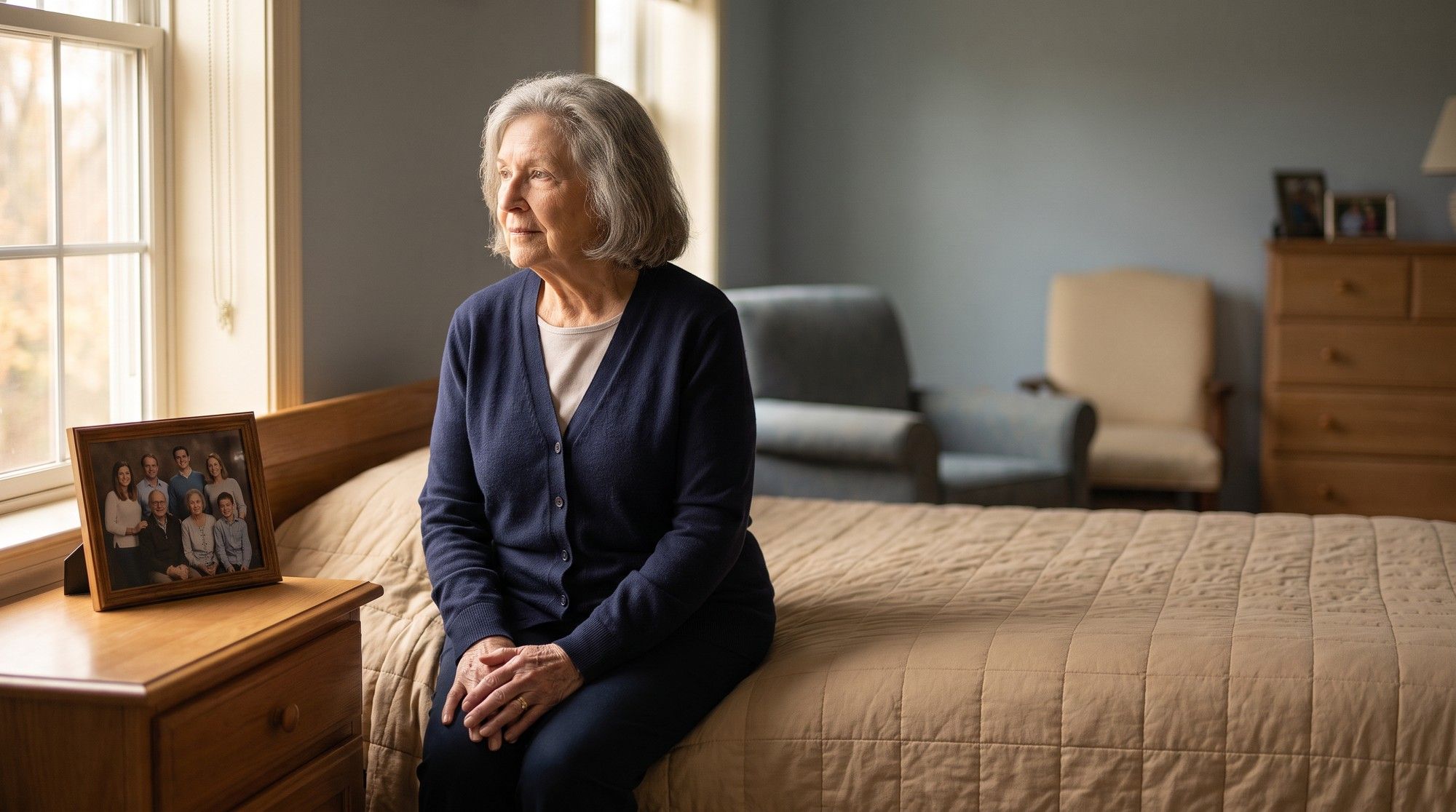
What Is Emotional Abuse in a Nursing Home?
Emotional abuse (also called psychological abuse, verbal abuse, or mental abuse) is conduct by staff, or by other residents the facility fails to control, that inflicts fear, agitation, humiliation, or other mental suffering on a resident. It is rarely a single outburst. The cases we see are patterns: the same aide, the same tone, the same threats, repeated until the resident stops asking for help at all. The forms it takes, from yelling and threats to isolation and deliberate silence, are described below.
Residents with dementia are the most frequent targets, because staff assume they will not remember and will not be believed. A resident who cannot follow a conversation can still feel fear, and the feeling outlasts the memory of its cause. California law does not treat cognitive impairment as an excuse. It is the reason the resident needed protection.
Why this matters legally: California's Elder Abuse Act defines abuse to include the infliction of mental suffering, and the law does not require a physical injury before a facility can be held responsible for it.

How Does Emotional Abuse Happen in a Nursing Home?
Emotional abuse grows in the same soil as every other kind: too few staff, too little training, burnout, and no meaningful supervision. An aide responsible for a full hall has no time for patience. Intimidation is faster. A resident who is afraid to ask for help asks less often, and an overwhelmed aide learns that fear makes the shift go quicker.
A facility that does not train its staff in dignity and dementia care, does not supervise the night shift, and ignores grievances is signaling that this behavior is tolerated. We have read complaint logs in which the same aide is named by different families across months, with the notation "counseled" and nothing else. When the facility's answer to a pattern is a conversation, the pattern continues.
Retaliation is its own recurring shape. A family complains about missed showers, and within days the resident's treatment quietly gets worse: longer waits, colder tone, a room change, visits discouraged because your mother "gets agitated after you leave." The timing is not a coincidence, and it is often the strongest evidence in the case.
Why this matters legally: understaffing, absent supervision, and ignored complaints are decisions made above the aide, and they are how a case reaches past one bad employee to the facility and the corporate chain that owns it.
Who Is at Risk for Emotional Abuse?
Any resident can be a target, but some are singled out. Residents with dementia are at the greatest risk, because they cannot report reliably and are easy to discredit. Residents who depend on staff for toileting, eating, or repositioning are vulnerable because the abuser controls everything they need. Residents without frequent visitors have no witness and no advocate. Residents who complain, or whose families complain, are targeted for retaliation. Residents who are heavily medicated, who have limited speech after a stroke, or who do not speak English well cannot describe what is happening to anyone who could stop it.
Federal rules require every nursing home to assess each resident on admission, including cognition, mood, and communication, and to plan care around the findings. A resident assessed as unable to self-report is a resident the facility has documented as needing closer watching, not less.
Why this matters legally: when the chart shows a resident who could not communicate, had no regular visitors, and was fully dependent on staff, the facility has documented exactly why its supervision mattered, and the question becomes what supervision it actually provided.
What Are the Forms of Emotional Abuse in Nursing Homes?
The forms below are the ones that appear in nursing home complaints, state investigations, and our own case files. Any of them, especially as a pattern, can amount to abuse under California law.
What Does Verbal Abuse Look Like?
Verbal abuse is the most common form: yelling, screaming, cursing, insults, and mockery. It includes sarcasm aimed at a resident's confusion, comments about incontinence loud enough for the hall to hear, and talking to a grown adult as if they were a child. Families often hear a softened version of it during visits. What you hear in front of you is a preview of what happens when you leave.

What Are Threats and Intimidation?
Threats are promises of consequences: no dinner if you keep ringing, no shower this week, we will move you to the locked unit. Intimidation is the same message delivered without words. Standing over a resident in bed. Snatching the call light out of reach. Slamming a drawer. A resident who cannot stand, cannot leave, and cannot call anyone has no defense against it.
What Is Humiliation?
Humiliation is abuse that targets dignity. Leaving a resident exposed during care with the door open. Making a resident wait in soiled clothing as a lesson. Ridiculing a resident in front of roommates. Hiding a resident's glasses, dentures, or hearing aids. Federal rules require a nursing home to care for each resident in a manner that promotes and maintains dignity, and inspectors cite that failure under tag F550 and the related dignity requirement at F557.
What Is Isolation or Involuntary Seclusion?
Isolation is cutting a resident off from family, phone calls, mail, activities, or other residents as a means of control, punishment, or retaliation. California recognizes the isolation of an elder as its own form of abuse (Welfare and Institutions Code 15610.43). Federal inspectors cite the same conduct as involuntary seclusion under tag F603, which covers confining a resident to their room or away from others against their will for staff convenience or discipline. If a facility begins limiting your visits or telling you your mother "does not want visitors" right after you filed a complaint, write down the date.
What Is Ignoring a Resident as Punishment?
Silence can be abuse. Refusing to speak to a resident, walking past a lit call light, or deliberately making one resident wait longest for toileting help sends a clear message: complaining makes it worse. When call lights go unanswered across the building because there are too few staff, the same facts support a nursing home neglect claim. When one resident's light is ignored because staff have singled that resident out, it is abuse.
Why this matters legally: each of these forms maps to a specific federal requirement the facility agreed to meet as a condition of taking Medicare and Medi-Cal payment, so the facility cannot argue that it did not know the conduct was prohibited.
What Can a Family See?
Because emotional abuse leaves no mark on the body, families have to watch behavior. New fear, anxiety, or agitation around specific staff members, or a resident who goes quiet the moment a particular aide enters the room. Withdrawal: a parent who was engaged and is now silent, who has stopped going to activities, who no longer looks up when you arrive. Reluctance to speak openly while staff are present. Changes in sleep, including new nightmares or refusing to lie down. Changes in eating, including refusing meals from one aide but not another. Rocking, mumbling, hand-wringing, or other self-soothing behaviors that are new. A resident who hints at mistreatment, who apologizes constantly, or who suddenly does not want you to leave. Staff who belittle your loved one in front of you.
Two cautions from experience. First, facilities routinely blame these changes on dementia or "normal decline," and sometimes that is true. Involve your loved one's physician early; a doctor can help separate disease progression from distress, and the visit creates a medical record either way. Second, do not wait for your loved one to say the words. Many residents never report abuse because they are ashamed, afraid, or dependent on the very person mistreating them. Trust the change you are seeing.
Why this matters legally: a documented change in condition, dated by you and confirmed by a physician, is the emotional abuse case's equivalent of a wound photograph.
How Is Emotional Abuse Connected to Chemical Restraint?
This is the connection facilities least want you to understand. A resident who is frightened or crying out because of how staff treat them is, in the chart, a resident with "behaviors." The standard response to behaviors in an understaffed building is not to ask what is causing them. It is to call the physician and request a sedative or an antipsychotic. The drug quiets the resident, and the chart now reads as if the problem was solved.
Federal rules prohibit chemical restraint, meaning any drug used for staff convenience or discipline rather than to treat a medical condition, and they require that psychotropic medications be prescribed only for a documented clinical indication, with attempts to reduce the dose over time. Inspectors cite violations under tag F758. We read the medication administration record beside the nursing notes and the staffing sheet. A new antipsychotic order that appears the week after a family complaint, with no psychiatric evaluation and no attempt to find a cause, is not treatment. It is the abuse being covered with a prescription.
Sedation also does its own harm. Antipsychotics in elderly residents with dementia carry serious risks, including falls, pneumonia, and death, and a resident who is drugged into silence cannot report what was done to them. If your loved one's medications changed around the time their behavior changed, ask for the prescribing record and the reason given. Our page on medication errors covers the rest.
Why this matters legally: an unnecessary psychotropic prescribed to manage a resident's reaction to mistreatment is a second violation on top of the first, and the medication record often supplies the date the facility knew something was wrong.
What Are the Complications of Emotional Abuse?
Psychological harm does not stay psychological. A resident who is afraid of staff stops asking for water and becomes dehydrated. Stops reporting pain. Stops using the call light, tries to reach the bathroom alone, and falls. Stops eating when the abusive aide serves the tray and loses weight. Refuses showers from the person who humiliated them and develops skin breakdown.
Depression in elderly residents is itself a medical condition with physical consequences: poor appetite, poor sleep, and a loss of the will to recover from anything else. A resident who has given up declines faster, and in the frailest residents that decline becomes the cause of death listed as "failure to thrive."
Why this matters legally: the physical decline that follows emotional abuse is compensable harm in its own right, and it turns a case the facility calls unprovable into a case with medical records, weight charts, and hospital admissions.
What Does Proper Care Look Like?
Preventing emotional abuse is not complicated. It is management. A competent facility screens every applicant against the state's registry and criminal background checks. It trains staff on hire and every year in resident rights, dignity, and dementia care, including how to respond to a resident who is agitated or repetitive without threats or force. It staffs the floor so that aides are not choosing between patience and finishing the shift. It supervises, with charge nurses and administrators actually walking the halls, including nights and weekends.
It takes every grievance seriously: logs it, investigates it, interviews witnesses, and writes down what was found and what was done. Federal rules require a nursing home to report any allegation of abuse to the state, to investigate it, and to protect the resident from the accused staff member while the investigation runs. It looks for the cause of a resident's distress before it looks for a drug.
Why this matters legally: every one of those steps produces a record, and a facility that cannot produce the training log, the grievance file, or the investigation report has told you what it did not do.
What Should the Nursing Home's Records Show?
We know these records because we spent years defending facilities with them. In an emotional abuse case, we look for the admission and periodic assessments of mood, cognition, and behavior; the care plan and every revision; the nursing notes and aide flow sheets, which often record refused meals, refused care, crying, or new anxiety in the facility's own words; the medication administration record and every psychotropic order, with the stated indication and any psychiatric consult; the grievance log and complaint files; incident reports; any abuse investigation the facility opened and what it reported to the state; training records and the personnel file of the accused employee; the staffing schedules for the shifts in question; and the visitor log, which shows whether and when your access changed.
What is missing usually matters more than what is present. A grievance you filed in writing that does not appear in the log. An abuse allegation with no investigation file. A new antipsychotic with no documented reason. A "resident refused" entry every day for one aide and never for another.
Once we are retained, we request the complete chart and internal records immediately. If we are not able to take a case, we will often ask the family to obtain the records themselves so that we, or another lawyer, can see what happened.
Why this matters legally: the records are the case, and the longer they stay in the facility's hands, the more chances there are for a late entry to explain away what the earlier entries show.
How Can I Document Emotional Abuse When There Are No Physical Marks?
Families often assume that without a photograph of an injury there is no case. That is what facilities want you to believe. An emotional abuse case is built from a pattern, and you can record it while it is happening.
Keep a dated log. After every visit, write down the date, the time, who was on shift, what you observed, and the exact words anyone used. "Rude" is an opinion. "Aide said 'stop crying or I'll leave you in it' at about 6:40 p.m. on the 14th" is evidence. Note your loved one's mood each visit so that the change over time is on paper. Vary your visit times and go unannounced. Talk to other families and to roommates, who may have seen the same aide behave the same way, and get their names. Put every complaint to the facility in writing and keep a copy. Ask your loved one's physician to note any change in mood, sleep, or appetite in the outside medical record. Photograph anything physical that is part of the story: a call light out of reach, a tray untouched, a hearing aid in a drawer.
California has specific rules about recording conversations, so ask us before you record audio or video where someone else could be captured. A written log kept at the time is admissible, powerful, and safe.
Why this matters legally: a contemporaneous log from a family member is the one record in the case the facility did not write, and juries believe it.
Emotional Abuse Citations in California Nursing Homes
California nursing homes are inspected by the California Department of Public Health on behalf of the federal government. Verbal, mental, and psychological abuse is cited under federal tag F600, involuntary seclusion under F603, failures of dignity and resident rights under F550 and F557, and unnecessary psychotropic medication under F758. Our directory tracks these citations for every certified nursing home in the state, along with the facility's staffing and its state enforcement history.
Across California's 1,165 certified nursing homes, inspectors recorded 993 abuse citations in the most recent 3 years of inspection data, at 453 different facilities, along with 536 citations for unnecessary psychotropic medication. You can look up any home in our California nursing home directory to see whether it has been cited for abuse, seclusion, or psychotropic misuse, what its inspectors found, and how its staffing compares with the state figures as published.
Why this matters legally: a facility with a prior citation for the same conduct was on notice, and notice is what turns negligence into the recklessness the Elder Abuse Act punishes.
Fast Facts About Emotional Abuse in California Nursing Homes
Why Is Emotional Abuse Considered Elder Abuse Under California Law?
Because the statute says so. California's Elder Abuse and Dependent Adult Civil Protection Act defines abuse to include the infliction of mental suffering (Welfare and Institutions Code 15610.07), and it defines mental suffering as fear, agitation, confusion, severe depression, or other serious emotional distress brought about by threats, harassment, intimidation, or other conduct (Welfare and Institutions Code 15610.53). Isolation is separately defined as abuse (Welfare and Institutions Code 15610.43). The Act's definition of neglect covers the failure to protect a resident from health and safety hazards (Welfare and Institutions Code 15610.57), which reaches a facility that knew about an abusive employee and left them on the floor.
Federal law reaches the same conduct from the other direction. Every nursing home that accepts Medicare or Medi-Cal must protect each resident's right to be free from verbal, mental, and psychological abuse and from involuntary seclusion (42 CFR 483.12). Where the conduct is criminal, California's elder abuse statute reaches the infliction of mental suffering on an elder or dependent adult (Penal Code 368), and a criminal referral is sometimes the right step alongside a civil case.
A facility is responsible for the conduct of its staff and for a culture that permits residents to be demeaned or intimidated. The aide who yells is not the whole case. The administrator who received repeated complaints about that aide and did nothing is.
Can I Sue a Nursing Home for Emotional Abuse in California?
Yes. An emotional abuse claim can be brought under the Elder Abuse Act (Welfare and Institutions Code 15600 and following) and under ordinary negligence law. Where the evidence shows the facility acted with recklessness, oppression, or malice, the Act's enhanced remedies apply (Welfare and Institutions Code 15657). Emotional abuse cases are well suited to the Act, because the conduct is intentional by nature. Nobody yells at a resident by accident.
The facility is the usual defendant, because protecting residents from abuse is the facility's duty, not any single aide's. The individual employee can be named too. But the case is really about the systems above the aide: hiring, training, supervision, staffing, and the handling of complaints. In many California nursing homes those decisions are made by a corporate parent that owns or manages a chain of buildings, and when headquarters set the staffing budget and ignored the grievance trend, the corporate owner belongs in the case. Where a hospice or outside agency supplied the staff member, that entity may share responsibility. We know where operators keep the documents that connect the budget to the behavior.
What Can My Family Recover?
The Elder Abuse Act gives families tools an ordinary lawsuit does not. Where the evidence shows recklessness or worse, the Act allows recovery of attorney's fees and costs, and it preserves damages for the resident's mental suffering even if your loved one passes away before or during the case.
A claim may cover the fear, humiliation, and distress your loved one endured, the cost of psychiatric care, the physical decline that followed (dehydration, weight loss, falls, hospitalizations), and, where sustained abuse contributed to a death, wrongful death damages for the family. Deliberate, humiliating, or retaliatory conduct is the kind that supports punitive damages.
How Much Is an Emotional Abuse Case Worth?
There is no fixed figure, and any website that quotes you one is guessing. Value depends on the severity of the conduct, how long it went on, how well it is documented, what the facility knew and when, whether the resident suffered physical decline, whether the facility retaliated, and whether the facts support the Elder Abuse Act's enhanced remedies. A facility with prior citations for abuse or seclusion faces more exposure, which is why we look up every building's history in our directory before the first call ends.
If you want a straight answer about your own case, call (888) 999-0169 or send us the basics through our contact page. For a fuller breakdown, see our nursing home settlement value guide.
What Should I Do Right Now?
If you suspect emotional abuse, a few steps protect your loved one and your family's case.
-
Start a Written Log Today
Dates, times, staff names, exact words, and your loved one's behavior at each visit. Keep it off the facility's property.
-
Get an Outside Physician Involved
Ask for an evaluation of mood, sleep, and appetite, and ask whether any new psychotropic medication is justified. If your loved one is in immediate danger, call Adult Protective Services or the police.
-
Report the Abuse in Writing
To the facility administrator, to the Long-Term Care Ombudsman, and to the California Department of Public Health, which licenses nursing homes and investigates complaints. You can file anonymously, and the facility may not retaliate for a complaint. Our guide to reporting nursing home abuse in California walks through every option, and we can file the complaint for you as part of taking your case.
-
Ask for the Complete Chart in Writing
Nursing notes, the care plan, the medication record, the grievance log, and any investigation. Keep a copy of your request and note the date.
-
Talk to a Lawyer Before You Accept the Facility's Explanation
Especially if you sense retaliation after speaking up. The version of events a facility gives families is rarely the version its own records support.
How Long Does an Emotional Abuse Case Take?
Most nursing home cases resolve in roughly one to two years, though every case is different. The early months go to gathering records, interviewing witnesses, and filing. The middle of the case is discovery: depositions of the aide, the charge nurse, and the administrator, production of grievance logs and staffing data, and expert review of the resident's decline. Many cases settle once the facility's own records are on the table. If not, we try the case.
Deadlines run in the background the whole time. California generally allows two years from the injury for elder abuse claims. Claims framed as medical negligence follow different timing rules, and claims involving government-run facilities have much shorter deadlines. Our statute of limitations guide covers the details. Evidence in these cases lives in memories and staff turnover, so the practical deadline is sooner than the legal one.
What We Do Differently
Thomas Wallin and the attorneys at Young & Wallin spent years defending nursing homes before switching sides, and emotional abuse is precisely the kind of case that background helps prove. Because there is no wound to photograph, these cases are built from patterns, and we know where the patterns are kept: the grievance log, the personnel file, the psychotropic orders, the staffing sheet, and the visitor log. We know how facilities dismiss emotional abuse as a "personality conflict," and how "resident exhibited behaviors" ends up in a chart as a substitute for "resident was frightened of the aide." When we request records, we already know what should be in them and what their absence proves.
Nothing on this page is medical advice; treatment decisions, including any decision about psychiatric medication, belong with a physician who has examined your loved one.
Talk to a California Nursing Home Emotional Abuse Lawyer Today
The pattern that proves emotional abuse is easiest to capture while it is still happening. Call (888) 999-0169 or reach us through our contact page for a free case evaluation. There is no fee unless we win. We serve families in all 58 California counties, and we have read these charts from both sides of the courtroom.
Other Injuries That Travel With Emotional Abuse
If your family member also suffered any of the following, the pattern strengthens the case: physical abuse, sexual abuse, nursing home neglect, medication errors, and wrongful death. A facility that tolerates humiliation tends to tolerate the rest. Each has its own page in our practice area library.
Frequently asked questions
What Is Considered Emotional Abuse in a Nursing Home?
Emotional abuse is conduct that inflicts mental suffering on a resident: yelling, threats, intimidation, humiliation, deliberately ignoring a resident, or isolating them from family. Under California's Elder Abuse Act, the infliction of mental suffering is a recognized form of elder abuse, and a facility can be held liable for it without any physical injury.
How Do You Prove Emotional Abuse Without a Physical Injury?
Through evidence of a pattern: your own dated log, accounts from other families and residents, staffing and training records, grievance logs and prior complaints, the medication record, and documented changes in the resident's mood, sleep, and appetite. Facilities keep more records than they would like.
Is Isolating a Resident From Family a Form of Abuse?
Yes. California law treats the isolation of an elder as a means of control or retaliation as its own form of elder abuse, and federal inspectors cite the same conduct as involuntary seclusion. If a facility is limiting your access after you complained, that timing is worth a lawyer's review.
Is Ignoring Call Lights Emotional Abuse or Neglect?
It can be either, and sometimes both. When staff leave one resident's call light unanswered to punish or control them, that is abuse. When call lights go unanswered across the facility because there are too few staff, that is neglect caused by the facility's staffing decisions. Both support a claim, and the evidence for one often proves the other.
Can Emotional Abuse Lead to Chemical Restraint?
Often. A resident who is frightened because of mistreatment is charted as having "behaviors," and the quickest response in an understaffed building is a sedative or antipsychotic. Federal rules prohibit drugs used for staff convenience or discipline and require a documented clinical reason for every psychotropic, so a new prescription with no evaluation behind it is evidence in its own right.
What If the Facility Retaliated After We Complained?
Retaliation against a resident or family for reporting concerns is prohibited, and it tends to strengthen a case rather than weaken it. Document the timing: what you reported, when, and how the resident's treatment changed afterward.
What Is the Average Settlement for Nursing Home Emotional Abuse?
There is no reliable average, and no honest lawyer will quote one before reviewing the facts. Value turns on the severity and duration of the abuse, the documentation, any related physical decline, and whether the Elder Abuse Act's enhanced remedies apply. Our nursing home settlement value guide explains what moves value up or down.
How Long Do I Have to File an Emotional Abuse Lawsuit in California?
Generally two years from the injury, though the deadline can be shorter depending on the facts, including whether a government-run facility is involved and how the claim is framed. Because pattern evidence fades quickly, the practical deadline is much sooner than the legal one.
How Do I Report Emotional Abuse in a California Nursing Home?
Report it in writing to the facility administrator, to the Long-Term Care Ombudsman, and to the California Department of Public Health, and call Adult Protective Services if the resident is in danger. Reporting does not require a lawyer and does not prevent a lawsuit later. Our guide to reporting nursing home abuse in California lists the agencies and what to say.

Free Case Evaluation
Confidential. No obligation. Available 24/7.