

My Parent Fell in a Nursing Home: Should I Call a Lawyer?
Quick Answer: A fall that breaks a hip is not the price of getting old in a care facility. Nursing homes admit residents because they can no longer keep themselves safe, and preventing falls is what the facility is paid to do. If your loved one suffered a serious fall, a fracture, or a head injury in a California nursing home, you may have a claim under the state's Elder Abuse Act, which carries remedies far stronger than an ordinary injury lawsuit. Call (888) 999-0169 or send us a message for a free, confidential consultation. You pay nothing unless we win.
When a nursing home tells you your mother's fall was an accident, remember that the facility took her in knowing she was a fall risk. That was the point of the placement. We spent years on the defense side of these cases, and we can tell you what the facility's own lawyers know: a serious fall in a high-risk resident almost always means someone stopped watching. This page explains how falls happen, who is at risk, what injuries follow, what a facility must do before and after a fall, what its records should show, and what your family can do about it.
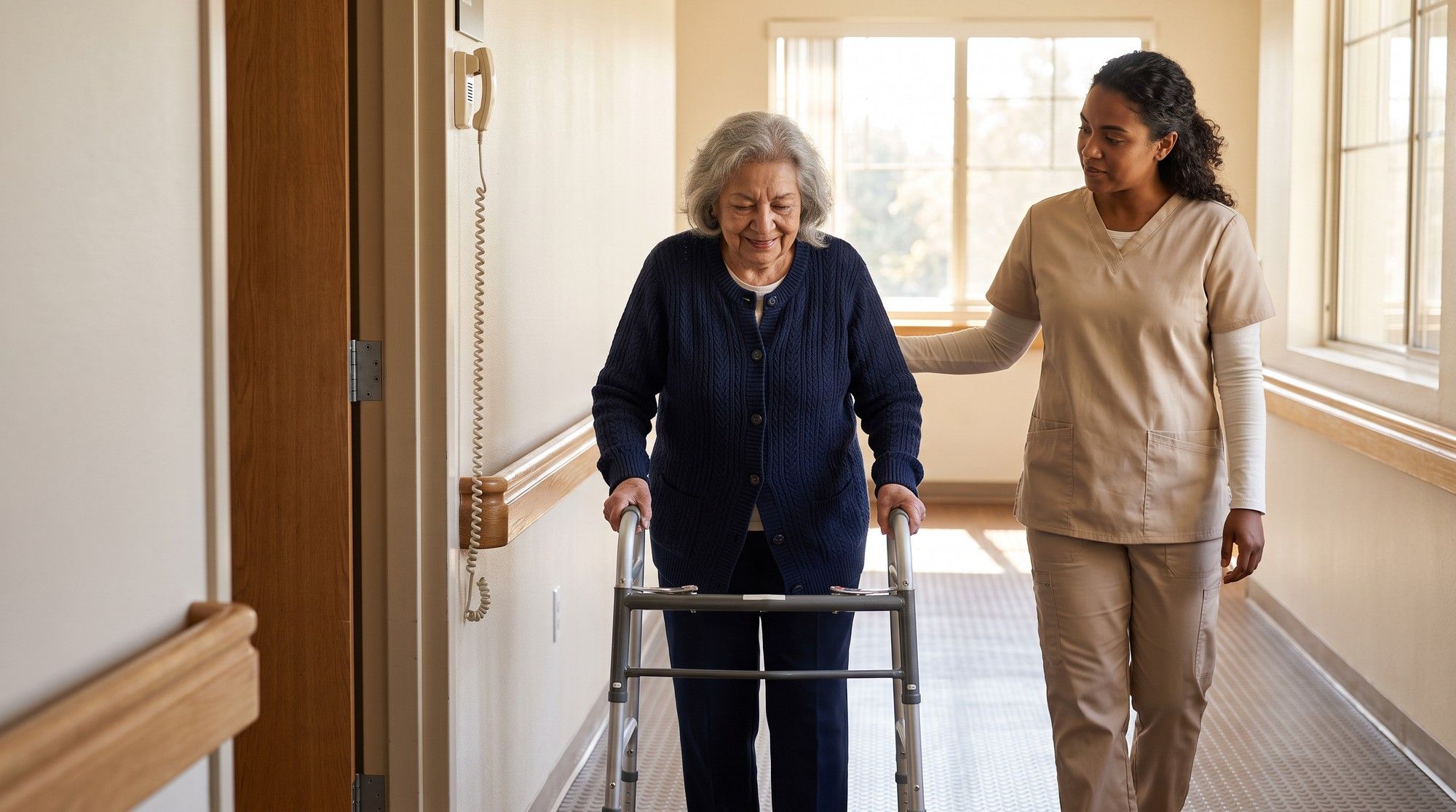
This Injury in the California Record
Why Are Falls in a Nursing Home Different?
People fall everywhere. What makes a nursing home fall a legal matter is that the resident was in the facility's care because they could no longer keep themselves safe. Preventing falls is not an extra service. It is the reason the family is paying for a skilled nursing bed instead of a spare room at home.
Why this matters legally: federal and California law treat a fall in a known high-risk resident as a question about supervision, not as a natural part of ageing.
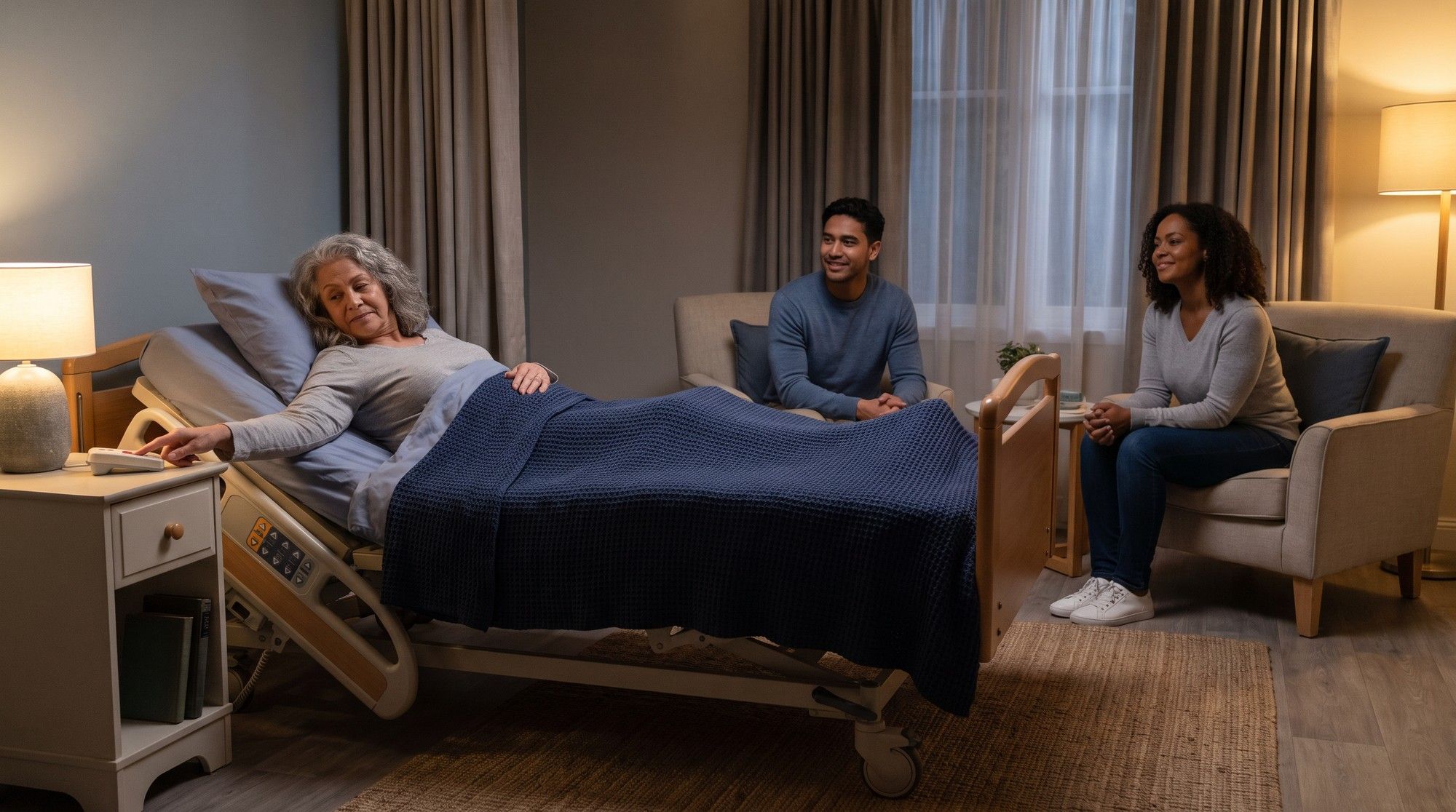
How Do Falls Happen in a Nursing Home?
Every fall has two parts: something inside the resident that makes standing hard, and something in the building or the care that turns that difficulty into a fall.
The internal causes are the ones the facility writes down at admission: weakness, poor balance, a stroke, Parkinson's disease, poor vision, urgency to reach the toilet, and dementia that keeps a resident from remembering to call for help. Medications add to all of it. Sedatives, antipsychotics, blood pressure drugs, and opioids each cause dizziness or cloud judgment, and a resident on several at once is at sharp risk.
The external causes are the facility's responsibility from the first day: wet floors, poor lighting, beds left in the high position, brakes left off a wheelchair, a call light out of reach, socks on a tile floor, a walker parked across the room. Then there are the care failures: a call light that goes unanswered until the resident tries to reach the bathroom alone, a two-person transfer attempted by one aide, an alarm turned off because nobody can answer it, a resident who needs supervised walking left in a chair until standing itself becomes dangerous.
Falls cluster at predictable times: nights, when staffing is thinnest and residents wake needing the toilet; shift changes; and meal times, when the halls are empty.
Why this matters legally: every one of these causes has a countermeasure the facility already knows, so a fall that follows one of them is a failure to do something the facility had written down.
Who Is at Risk for a Fall?
Facilities are required to identify residents at risk of falling on admission and to reassess them after any change in condition. The tool most California nursing homes use is the Morse Fall Scale, which scores six items: a history of falling, more than one diagnosis, use of a walking aid or furniture to move, an intravenous line, gait, and mental status, meaning whether the resident overestimates what they can do alone. A high score is supposed to trigger a specific prevention plan, not a note in the chart and nothing else.
The name of the tool matters less than what happens next. A resident scored as high risk should have interventions that match the score, and a level of assistance written in plain terms (one-person assist, two-person assist, mechanical lift) that every aide on every shift can read. The residents at highest risk are the ones who have already fallen. A first fall predicts a second, which is why the care plan is supposed to change after every fall.
Why this matters legally: a resident's fall risk score is in the chart, and a facility that documented high risk and then failed to match it with real interventions has written the first page of the case itself.
What Injuries Do Falls Cause in Elderly Residents?
Falls in the elderly are rarely minor. A younger person catches themselves. A frail resident in her eighties does not. Wrist, shoulder, pelvic, and spinal fractures are common, and so is the quieter harm of a resident who falls once, becomes afraid to move, and slides into the immobility that invites bedsores. The two injuries below are the ones that change everything.

What Happens When an Elderly Resident Breaks a Hip?
A broken hip in an elderly resident usually means surgery, a long and painful rehabilitation, and permanent loss of mobility. Studies have long shown that a significant share of elderly hip fracture patients die within a year of the break.
A hip rarely breaks in a fall from a low bed onto a padded mat. It breaks in a fall from standing height, which usually means the resident was on her feet without the assistance her care plan required. The fracture is often only the first event in a chain: surgery, weeks in bed, pneumonia, blood clots, and pressure sores. A claim can account for that whole decline.
What Is a Subdural Hematoma?
A subdural hematoma is bleeding between the brain and its outer covering. In an older person the bridging veins are stretched, and a fall that seems modest can tear one. Residents on blood thinners are at particular risk. The danger is that the symptoms can take hours or days to appear: headache, new confusion, drowsiness, slurred speech, weakness on one side, and then unconsciousness. That delay is why the fall protocol requires neurological checks at intervals after any fall in which the head may have been struck and after every unwitnessed fall. A facility that put a resident back to bed and did not check on her for hours has missed the window in which a brain bleed is treatable.
What Are Transfer Injuries?
Not every fracture comes from a fall to the floor. Many come from the moment an aide moves a resident from bed to wheelchair or wheelchair to toilet. A transfer the care plan says needs two people, attempted by one, ends with the resident on the floor. A mechanical lift with the wrong sling or an unfastened strap drops a resident from waist height. Transfer injuries are almost always a staffing story: the plan called for two aides, and one tried alone because nobody else was available.
Why this matters legally: the injury tells us how the fall happened, and a fracture from standing height in a resident who was supposed to be assisted is evidence of the failure itself.
What Role Do Restraints and Alarms Play?
Families sometimes ask why the facility did not simply tie their mother into the chair. The answer is that restraints cause falls of their own, and federal law forbids using them for staff convenience. A resident boxed in by full bed rails will still try to get up, and now she is climbing over a rail from a greater height. A resident may be restrained only for a documented medical need, on a physician's order, after less restrictive options have been tried (42 CFR 483.10(e) and 42 CFR 483.12). A full set of side rails is a restraint, and a resident who slides between a rail and the mattress can be trapped.
Bed and chair alarms occupy a middle ground. A pressure pad alarm sounds when a resident starts to rise, which gives staff a chance to reach her before she is on her feet. Alarms only work if someone is close enough to answer them. In an understaffed building the alarm sounds in an empty hall, or staff silence it because they cannot respond fast enough for the noise to mean anything. Federal guidance also treats an alarm that keeps a resident frozen out of fear of the sound as a restraint.
Why this matters legally: a disabled alarm or a restraint applied without an order each shows up in the record, and the facility cannot answer a supervision failure by pointing to a device it turned off or was not permitted to use.
What Does Fall Prevention Look Like in a Well-Run Facility?
Prevention is not complicated; it is labour. A competent facility does the following for every at-risk resident.
It assesses fall risk on admission, on a schedule, and after every fall or change in condition, and it writes a care plan that matches the score. It sets the bed low, places a floor mat beside it, and keeps the call light and walker within reach. It toilets the resident on a schedule so she is not forced to try alone. It answers call lights promptly, which requires people on the floor to answer them. It provides the assistance the care plan calls for on every transfer, every time. It reviews medications, keeps the room lit and clear, and keeps the resident moving with therapy so that weakness does not become the next fall. And after every fall or near miss, it investigates the cause and changes the plan.
Every item on that list requires a person with time to do it. Corporate operators that run their buildings lean are betting that nobody will check whether the interventions written in the chart actually happened.
Why this matters legally: the care plan is a promise the facility wrote down, and the gap between the plan and what the staffing sheets show was possible on the floor is where most fall cases are won.
What Must a Nursing Home Do After a Fall?
California nursing homes are required to follow a fall protocol. After any fall, the facility should assess the resident for injury before moving her. It should notify her physician and the family promptly and get orders for X-rays or a hospital transfer. It should run neurological checks at intervals if she hit her head or the fall was unwitnessed. It should complete an incident report that records what happened, when she was found, and who was present. It should investigate the cause and update the care plan. And where the fall caused serious injury, it must report the event to the California Department of Public Health.
Compare that list to what actually happened and the gaps appear fast. Families learn about a fall days later, or only when they notice a bruise. A resident with a broken hip is put back in bed and the fracture is found the next day when she screams during a transfer. Each gap is a separate failure.
Why this matters legally: a chart that shows a fall at night and no physician call until morning documents a second failure on top of the first, and in a death case that delay is usually the heart of the claim.
What Does "Found on the Floor" Really Mean?
Many fall cases start with the same phrase in the chart: "resident found on floor." No one saw the fall. No one knows how long she lay there or whether she hit her head.
An unwitnessed fall is not a dead end. It is often the strongest evidence of neglect, because a high-risk resident is only alone long enough to fall and lie undiscovered when supervision has broken down. The staffing sheets, alarm logs, and call-light data usually tell a more precise story than the incident report. If the aide assigned to the hall was also covering a second hall that night, the chart has already explained the fall.
Why this matters legally: a facility that cannot say how a fall happened has admitted that no one was watching, and the burden of showing that supervision was adequate is the facility's, not yours.
What Can a Family See?
Families are often told very little after a fall. Pay attention to the signs that a fall was preventable: an unexplained fracture or bruise with a vague account of how it happened; a fall while your loved one was trying to reach the bathroom alone; an alarm unplugged on the nightstand; a two-person assist in the care plan that was not being followed when you visited; near misses the facility never told you about; a new fear of walking.
Also watch the room. Is the bed low? Is the call light within reach? Are the wheelchair brakes locked? Those details are the environment the facility is required to keep free of hazards, and a family can photograph them. If your loved one cannot reliably tell you what happened, the chart and the staffing sheets can.
Why this matters legally: what you saw and when you saw it is evidence, and a dated photograph of a bed left high or an alarm left off is often the clearest record of a hazard the incident report never mentions.
What Should the Nursing Home's Records Show?
Every serious fall case is built on paper. We know these records because we spent years defending facilities with them. In a fall case, we look for the fall risk assessments; the care plan and every revision of it; the incident report for every fall and near miss; the neurological check sheets; the flow sheets showing rounding and toileting; the medication records; physician notification notes; the alarm and call-light logs; and the daily staffing reports for the unit.
Two patterns are worth watching for: the care plan that never changes, where a resident falls three times and the interventions after the third fall read exactly as they did before the first, and late, reconstructed charting, where the notes were written days after the fall and read suspiciously smooth. What the absence of a record proves is often more important than what a record says.
Once we are retained, we request the complete chart immediately. If we are not able to take a case, we will often ask the family to obtain the records themselves so that we, or another lawyer, can see what happened.
Why this matters legally: the records are the case, and the longer they sit in the facility's hands, the more chances there are for a late entry to appear.
Am I Allowed to Photograph My Loved One's Injuries?
Yes. You are entitled to see your family member and to document their condition. Photograph bruises and surgical sites if you can do so with dignity, include something that shows the date, and keep the photos somewhere safe. Photograph the surroundings too: a bed in the high position, an alarm unplugged, a call light on the floor. Records inevitably change; staff move on; a dated photograph does not.
Why this matters legally: a photograph taken by a family member is frequently the only image of the room as it actually was.

Fall Citations in California Nursing Homes
California nursing homes are inspected by the California Department of Public Health on behalf of the federal government. A failure to keep the environment free of accident hazards or to provide adequate supervision is cited under federal tag F689, and a failure to keep enough nursing staff on the floor is cited under federal tag F725. Fall cases sit at the intersection of the two. Our directory tracks both for every certified nursing home in the state.
Across California's 1,165 certified nursing homes, inspectors recorded 2,334 accident and supervision citations in the most recent 3 years of inspection data, at 868 different facilities. In the same window, 162 facilities were cited for insufficient nursing staff. You can look up any home in our California nursing home directory to see whether it has been cited and what its inspectors found.
Why this matters legally: a facility with a prior citation for the same failure was on notice, and notice is what turns negligence into the recklessness the Elder Abuse Act punishes.
Fast Facts About Falls in California Nursing Homes
When Is a Nursing Home Fall Negligence and When Is It an Accident?
A fall is negligence when the facility knew the risk and failed to act on it. A fall is an accident when the facility did everything a careful facility should do and the resident fell anyway. The second category is real, but it is much smaller than nursing homes claim.
The questions that separate the two are concrete. Did the facility assess fall risk? Did the care plan match the risk with real interventions? Were those interventions being carried out on the day of the fall? A high-risk resident found on the floor at 3 a.m., alarm off and call light out of reach, did not have an accident. She had a facility that stopped doing its job. A fall in a resident whose plan was followed is a tragedy. A fall in a resident whose plan sat in a binder is a case.
Why Is a Preventable Fall Considered Neglect Under the Law?
Several layers of law require a nursing home to prevent foreseeable falls.
Federal regulations require facilities to keep each resident's environment as free of accident hazards as possible, to provide adequate supervision and assistance devices to prevent accidents (42 CFR 483.25(d)), and to keep sufficient nursing staff on duty to do so (42 CFR 483.35). California's Elder Abuse and Dependent Adult Civil Protection Act defines neglect to include the failure to protect a resident from health and safety hazards and the failure to assist with personal hygiene and mobility (Welfare and Institutions Code 15610.57). The state's Patients' Bill of Rights for skilled nursing facilities (Health and Safety Code 1599 and following, with the detailed rights at 22 CCR 72527) guarantees residents care that meets professional standards, and Health and Safety Code 1430(b) lets a resident or the family sue directly for violations of those rights. Where the conduct is criminal in its disregard for a resident's safety, California's elder abuse statute (Penal Code 368) can apply.
Taken together, these rules mean a facility that admits a known fall risk takes on a legal duty to assess, plan for, and actively prevent that resident's falls. When it fails, the failure has a name in the law. Understaffing is the engine behind most fall cases we see, and the same failure that leaves a call light unanswered also shows up as bedsores and dehydration. If you are seeing more than one of these problems, read our page on nursing home neglect.
Can I Sue a Nursing Home for a Fall in California?
Yes. A fall claim in California can be brought under ordinary negligence law and, where the evidence shows the facility acted recklessly, under the Elder Abuse and Dependent Adult Civil Protection Act (Welfare and Institutions Code 15600 and following). The Act exists for cases like these: a dependent adult, a caretaker with a duty, and a failure to provide the care that duty required.
The facility does not get to close the file by calling the fall an accident. Once the records show a high-risk score and a fall that happened while the planned interventions were not in place, the facility has to explain why, and that explanation is tested against its own staffing sheets, alarm logs, and prior citations.
Who Is Liable for a Nursing Home Fall?
The facility itself is the usual defendant, because preventing falls is the facility's legal duty, not any single aide's. Individual staff members can be named too, but the case is really about the systems above them. In many California nursing homes, staffing decisions are made by a corporate parent that owns or manages a chain of buildings. When budget targets set at headquarters left the floor without enough aides to answer call lights, the corporate owner belongs in the case. We know where operators keep the documents that connect the budget to the fall.
Sometimes other parties share the responsibility: a hospital that discharged a resident without communicating a new fall risk, or a hospice agency whose aide attempted a transfer alone.
What Can My Family Recover?
California's Elder Abuse Act gives fall victims tools an ordinary negligence case does not. Where the evidence shows the facility acted with recklessness, malice, or oppression in neglecting a resident, the Act allows recovery of attorney's fees and costs, and it preserves the victim's pain and suffering damages even if your loved one has since passed away.
A claim may cover the cost of surgery and hospitalisation, rehabilitation and long-term care, the physical pain and emotional suffering the injury caused, and, where a fall led to death, wrongful death damages for the family. In the most egregious cases, punitive damages are available.
How Much Is a Nursing Home Fall Lawsuit Worth?
There is no fixed settlement amount for a fall case, and any website that quotes you one is guessing. Value depends on the severity of the injury, whether the fall led to surgery, permanent loss of mobility, or death, how clearly the care plan was violated, what the staffing records show about why, how long the resident waited for medical attention, and whether the evidence supports the Elder Abuse Act's enhanced remedies. A facility with prior citations for accident hazards or short staffing faces more exposure, which is one reason we look up every building's history in our directory before the first call ends.
If you want a straight answer about your own case, call (888) 999-0169 or send us the basics through our contact page. A ten minute call is usually enough for us to tell you whether the fall you are describing supports a claim. For a fuller breakdown, see our nursing home settlement value guide.
Can an Elderly Resident Recover From a Hip Fracture?
Some do, with prompt surgery, pain control, and daily therapy. Many do not regain the mobility they had. Get a physician involved now if one is not already, and make sure it is a doctor who does not answer to the facility. Nothing on this page is medical advice; treatment decisions belong with a physician who has examined your loved one. A legal claim does not interfere with that care. It exists to pay for it.
What We Do Differently
Thomas Wallin and the attorneys at Young & Wallin spent years defending nursing homes before they switched sides. We know which incident reports and staffing records to demand, how "resident found on floor" gets written to imply nobody could have prevented it, how alarm and call-light logs reveal response times the facility would rather not discuss, and how defense counsel quietly values these cases behind closed doors. When we request records, we already know what belongs in them and what their absence proves.
What Should I Do Right Now?
If your loved one was seriously hurt in a fall, a few steps protect your family's case.
-
Get Medical Care From Someone Who Does Not Work for the Facility
Ask for X-rays and, if the head may have been struck or your loved one takes a blood thinner, a scan. New confusion or drowsiness after a fall is an emergency.
-
Photograph the Injuries and the Room
Date the photos. Include the bed height, the alarm, the call light, and the floor. Keep them off the facility's devices.
-
Ask for the Complete Chart in Writing
The fall risk assessments, the care plan, every incident report, and the call-light and alarm logs. Keep a copy of your request.
-
Report the Facility to the California Department of Public Health
You can file anonymously, and the facility may not retaliate against your loved one for a complaint. Our guide to reporting nursing home abuse in California walks through every option, and we can file the complaint for you as part of taking your case.
-
Talk to a Lawyer Before You Accept the Facility's Explanation
A conversation with the administrator does not become evidence; a written request for the chart does.
How Long Does a Nursing Home Fall Lawsuit Take?
Most nursing home cases resolve in roughly one to two years. The early months go to gathering records, medical review, and filing. The middle of the case is discovery: depositions of the aides and nurses on duty, production of staffing data and alarm logs, and expert review of the fall precautions. Many cases settle once the facility's own records are on the table. If a fair settlement is not offered, we try the case.
Deadlines run in the background the whole time. California generally allows two years from the injury for elder abuse and negligence claims, rules for claims against medical providers can differ, and claims involving government-run facilities have much shorter deadlines. Our statute of limitations guide covers the details, but the sooner a lawyer starts preserving evidence, the stronger your case.
Talk to a California Nursing Home Fall Lawyer Today
Staffing sheets get harder to find with every week that passes. Call (888) 999-0169 or reach us through our contact page for a free case evaluation. There is no fee unless we win. We serve families in all 58 California counties, and we have read these charts from both sides of the courtroom.
Other Injuries That Travel With Falls
If your family member also suffered nursing home neglect, bedsores, dehydration and malnutrition, medication errors, sepsis, or wrongful death, the pattern strengthens the case. Each has its own page in our practice area library.
Frequently asked questions
Can I Sue a Nursing Home for a Fall in California?
Yes. If a resident fell because the facility failed to assess their fall risk, follow the care plan, provide adequate supervision, or maintain a safe environment, the facility can be liable under California's Elder Abuse Act and ordinary negligence law.
Is a Broken Hip in a Nursing Home Considered Negligence?
Not automatically, but a hip fracture in a known fall risk deserves a hard look. The question is whether the fall precautions in the care plan were actually being followed. In our experience, the staffing records often show they were not.
What Is a Nursing Home Required to Do After a Resident Falls?
Assess the resident for injury, notify the physician and the family, monitor for head injury, complete an incident report, investigate the cause, and update the care plan. A facility that cannot produce this paperwork usually has a care problem underneath the paperwork problem.
What Is an Unwitnessed Fall in a Nursing Home?
A fall no staff member saw, typically charted as "resident found on floor." In a high-risk resident it often points to a supervision failure, because someone who needed monitoring should not have been alone long enough to fall and lie undiscovered. Staffing sheets and alarm logs usually show what the incident report leaves out.
Can a Nursing Home Use Restraints to Prevent Falls?
Only for a documented medical need, on a physician's order, after less restrictive options have failed. Federal law forbids restraints for staff convenience, and restraints cause falls of their own. A facility that answers a supervision problem with a restraint has traded one violation for another.
How Long Do I Have to File a Nursing Home Fall Lawsuit in California?
Generally two years from the injury, though the deadline can be shorter or longer depending on the facts, and claims against government-run facilities must be filed within months, not years. Incident reports and staffing records disappear quickly, so talk to a lawyer early.
What Is the Average Settlement for a Nursing Home Fall Lawsuit?
There is no fixed average, and any site quoting one is guessing. Value depends on the severity of the injury, the strength of the evidence that the fall was preventable, whether the fall led to death, and whether the Elder Abuse Act's enhanced remedies apply.
What If My Loved One Died After a Fall?
Your family may bring a wrongful death claim, and under the Elder Abuse Act the estate can still recover for the pain and suffering your loved one endured before passing. Falls that lead to a hip fracture and a rapid decline, or to an untreated brain bleed, are among the strongest cases we see.

Free Case Evaluation
Confidential. No obligation. Available 24/7.