

My Loved One Wandered Away From a Nursing Home: Should I Call a Lawyer?
Quick Answer: A resident with dementia who walks out of a nursing home unnoticed has not had an accident. Elopement is the predictable result of a facility admitting someone it knew might try to leave and then failing to supervise that person, secure the doors, or staff the unit. If your loved one wandered away from a California nursing home and was injured, exposed, struck by a vehicle, or not found in time, you may have a claim under the state's Elder Abuse Act, which carries remedies far stronger than an ordinary injury lawsuit. Call (888) 999-0169 or send us a message for a free, confidential consultation. You pay nothing unless we win.
Facilities describe an elopement the same way almost every time: nobody could have predicted it, the door was working, the staff did everything right. We spent years defending nursing homes, and we know what the facility's own lawyers are thinking when they hear that story. They are thinking about the admission assessment that flagged wandering risk on day one, the care plan that promised checks that never happened, and the alarm log that shows a propped door. This page explains why residents with dementia try to leave, what a facility must do about it, what the records should show, and what your family can do now.
What Is the Difference Between Wandering and Elopement?
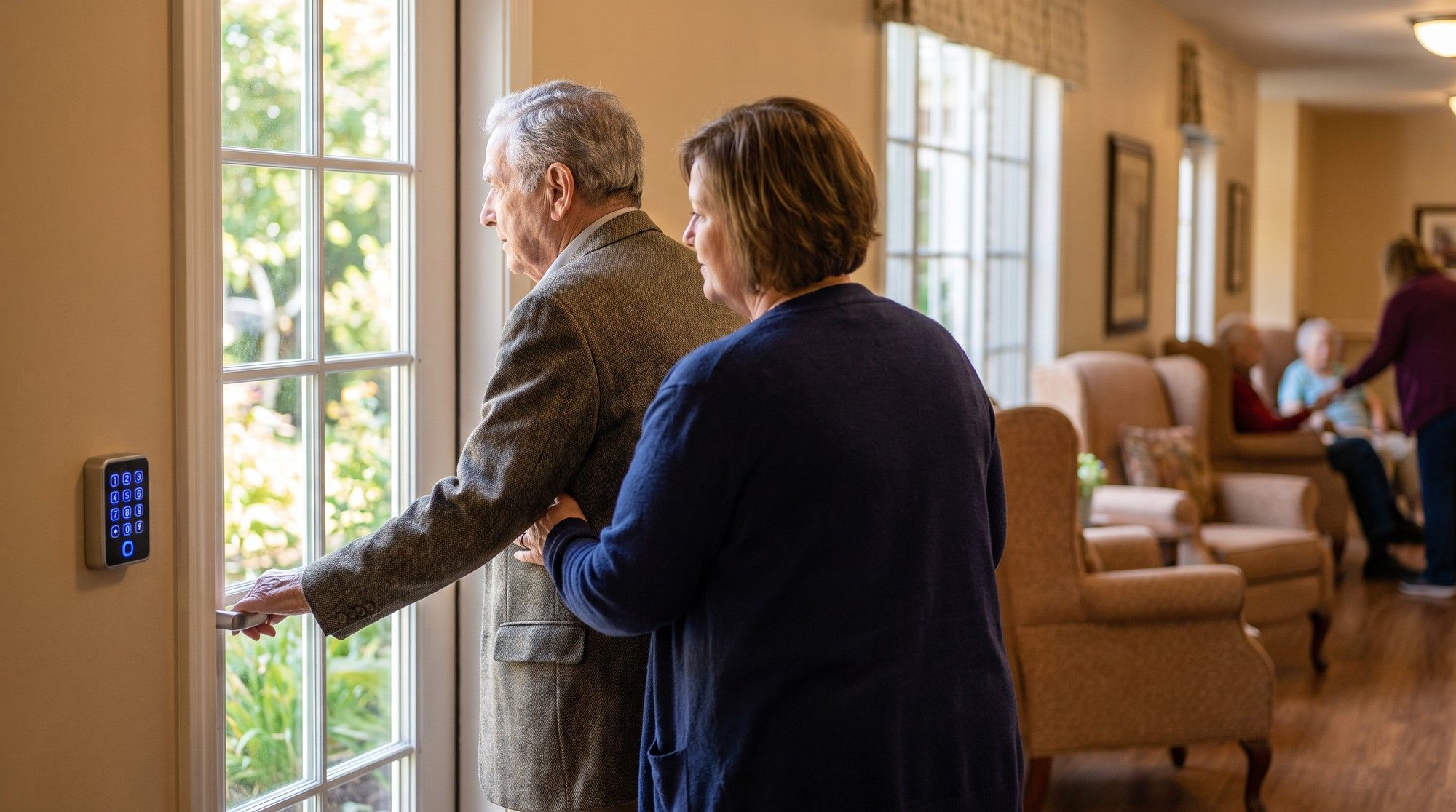
Wandering is movement without a safe purpose or a clear awareness of where the person is going. It is one of the most common behaviours in Alzheimer's disease and the other dementias, and inside a properly designed and supervised building it is manageable. A resident who paces the hallway or walks into another resident's room is wandering. Staff can redirect that resident, give them somewhere safe to walk, and keep them in view.
Elopement is what happens when a wandering resident leaves the building, the grounds, or a secured unit without staff knowing. It does not matter whether your loved one went out a fire exit, followed a visitor through the lobby, or slipped from a locked memory unit into an unlocked wing. If staff did not know the resident was gone, it was an elopement.
Facilities sometimes describe a dangerous event as "wandering" to make it sound routine. A resident found in the parking lot did not wander. That was an elopement, and the facility's own policies almost certainly say so.
Why this matters legally: wandering is a known risk that a facility accepts when it admits a resident with dementia, and an elopement is proof that the safeguards built around that risk were not working on the day it mattered.
Why Do Residents With Dementia Try to Leave?
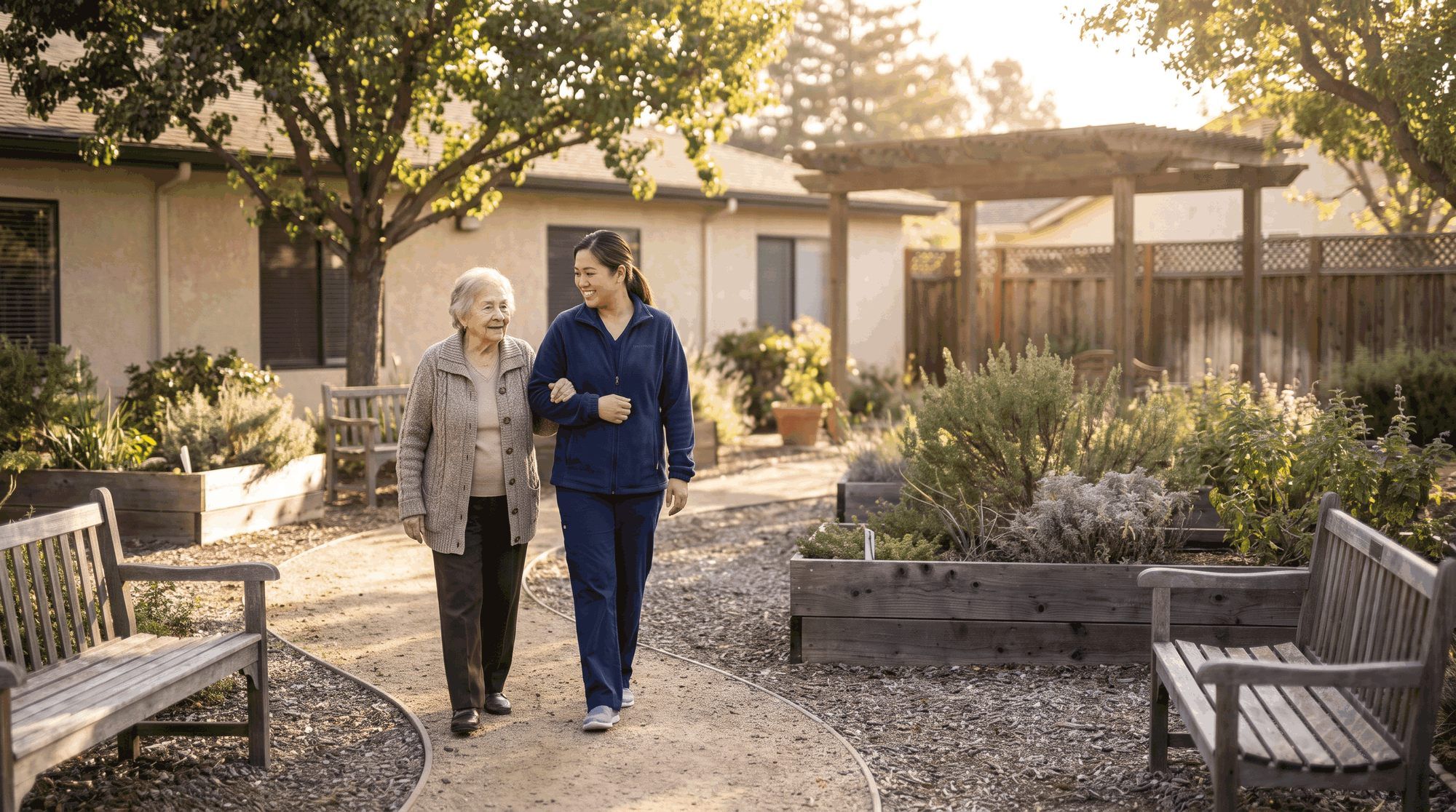
Exit-seeking is not stubbornness and it is not a choice. Dementia damages the parts of the brain that handle orientation, memory, and judgment, so a resident may honestly believe the children need to be picked up from school. Others are looking for a spouse who died years ago, a house they no longer own, or a job they retired from. Some are simply uncomfortable: in pain, hungry, overstimulated by noise, or frightened by an unfamiliar room, and walking is the only way they know to fix it.
Certain triggers are well known to anyone trained in dementia care. Late afternoon and early evening, when confusion often worsens (families hear this called sundowning), is a peak time for exit-seeking. Shift change, when attention is scattered, is another. A room change, a hospital return, or a change in medication can set off restlessness. So can seeing a visitor leave. None of this is a surprise to a facility that markets memory care, and the care plan is supposed to record what staff learned about this resident and what they will do about it.
Why this matters legally: because exit-seeking follows recognised patterns, a facility that admitted a resident with dementia cannot credibly claim that an attempt to leave was unforeseeable.
Who Is at Risk, and What Is an Elopement Risk Assessment?
Any resident with cognitive impairment can wander, but some are at much higher risk, and facilities are required to identify them. A prior elopement or attempted elopement, whether at home, in a hospital, or at another facility, is the strongest single predictor. Residents who are still mobile, who are new to the building, who repeatedly ask to go home, or who shadow staff toward the doors are showing the risk in plain sight. Families often know these things long before the facility does, which is why the admission interview is supposed to ask.
Federal rules require every certified nursing home to complete a comprehensive assessment of each resident on admission and at regular intervals afterwards (42 CFR 483.20). That assessment covers cognition, mood, behaviour, and mobility, and for any resident with dementia it should address wandering and exit-seeking directly. Many facilities use a separate wandering or elopement risk screen at admission, scoring diagnosis, mobility, history of attempts, statements about leaving, and behaviour observed on the unit.
The assessment is not a one-time form. It has to be repeated on schedule and whenever the resident's condition changes, and a near miss should trigger a new one. A resident found by an exit door, or asking three staff members how to get home in one afternoon, is a change in condition that a competent facility writes down and responds to.
Why this matters legally: a risk assessment that flagged wandering on admission, or that should have been updated after a near miss and was not, sets the standard of care the facility had to meet from that day forward.
What Should the Care Plan Say About Wandering?
The assessment feeds a care plan, and federal rules require that plan to address every identified risk with specific interventions (42 CFR 483.21). For a resident at risk of elopement, a care plan that says "monitor for wandering" is not a plan. A real one says which unit the resident lives on and why, whether the resident wears a wander-guard bracelet and who checks it, how often staff will lay eyes on the resident and record it, what redirection works for this particular person (a walk in the courtyard, a snack, a familiar photo), and what to do at the times of day when this resident is most restless.
The care plan is also supposed to be revised as staff learn. If the resident keeps heading for the loading dock after lunch, the plan should say so. A plan that reads the same after an elopement as it did on admission is a plan nobody was reading.
Why this matters legally: the care plan is a written promise, and the gap between what it promised and what the rounding sheets and alarm logs show actually happened is where most elopement cases are won.
How Do Door Alarms, Wander-Guard Devices, and Secured Units Work?
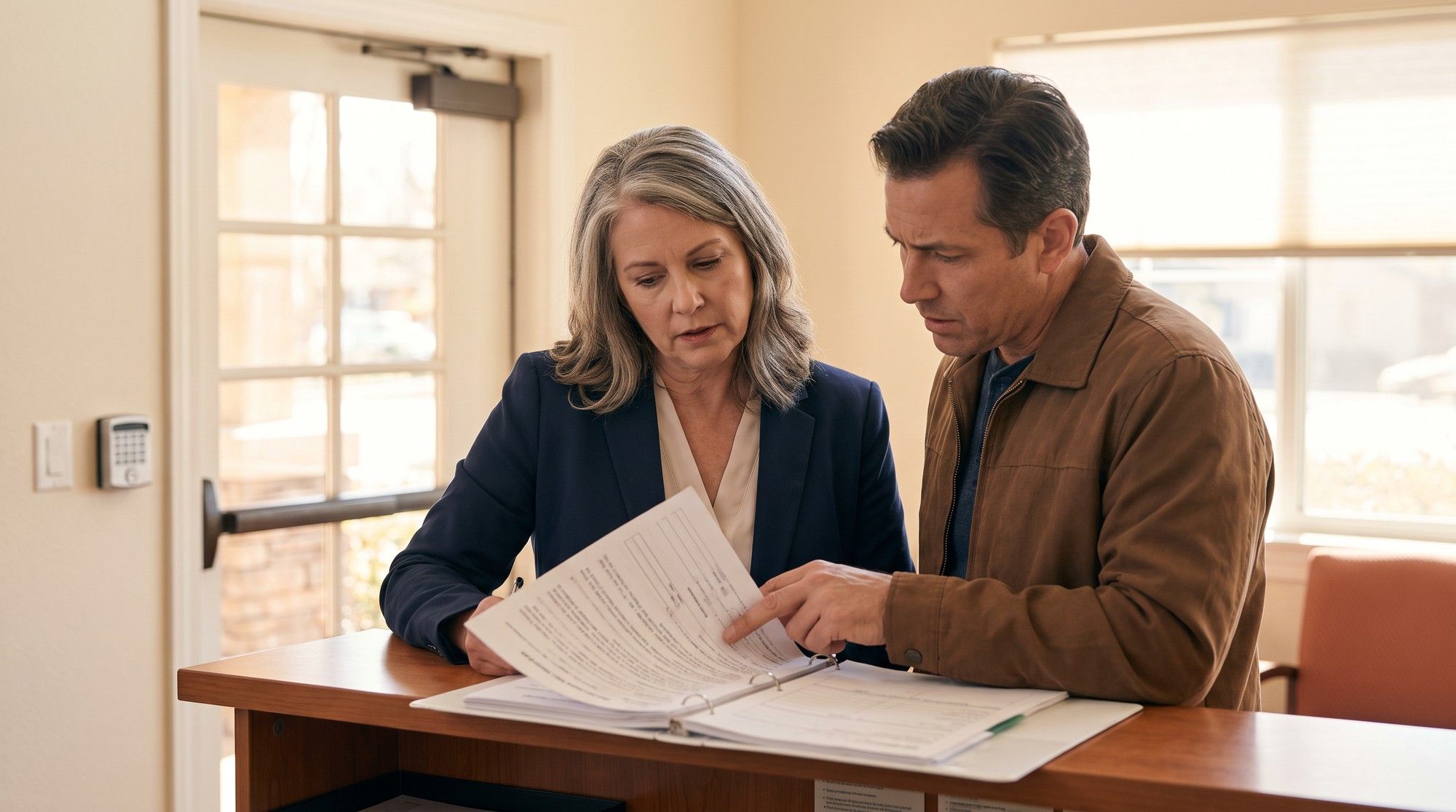
Physical safeguards are the second layer of protection after supervision, and every one of them depends on a person to maintain it and respond to it. A secured memory care unit typically uses locked or delayed-egress doors. A keypad code opens the door for staff and visitors; a delayed-egress door releases after a short interval once pushed, sounding an alarm so that staff can reach the resident first. Wander-guard systems (the general term for several branded products) pair a bracelet worn on the resident's wrist or ankle with sensors at exits and elevators. When the bracelet comes within range, the door locks, an alarm sounds, or both. Some buildings add courtyard fencing, disguised exits, and video at the main entrance.
Each safeguard has a known way of failing. Bracelet batteries die and must be tested on a schedule. Bracelets get removed by the resident or cut off during a hospital stay and never replaced. Alarms get silenced by staff tired of false alerts, or set to a volume nobody can hear at the far end of the hall. Doors get propped open for deliveries and smoke breaks. A delayed-egress door only works if someone is close enough to respond within the delay. A camera only helps if someone is watching it.
Why this matters legally: the facility is required to keep maintenance logs, battery checks, and alarm records for these systems, and those records will show which safeguard failed and how long it had been failing before anyone fixed it.
Why Does Elopement Happen in Nursing Homes?
Elopement is almost always a supervision failure, and supervision is a staffing decision. The pattern repeats from case to case. A resident is admitted with a documented history of wandering, and the care plan promises checks every half hour. On a short-staffed shift, those checks are skipped or charted without being done. A door alarm is disabled because it kept going off. A bracelet was never replaced after the last hospital stay. Nobody notices the resident is gone until a neighbour brings the resident back or the police call.
Overnight and weekend shifts carry the highest risk, because those are the shifts operators staff the leanest. Federal rules require a nursing home to have enough staff with the right skills to meet each resident's needs, and inspectors cite the failure under the sufficient staffing tag, F725. A memory care unit that needs three aides to watch the doors and the residents at once, and has one, is not meeting that rule no matter what its brochure says. Sometimes the failure is earlier still: a facility with no secured unit accepts a resident it cannot safely supervise because the bed is empty and the bed pays.
Why this matters legally: when the staffing sheets show a unit running below what the care plans required, the elopement stops looking like one aide's mistake and starts looking like a choice made above the floor, which is what turns negligence into the recklessness the Elder Abuse Act punishes.
What Can a Family See Before an Elopement Happens?
Families are often the first to notice exit-seeking, because a resident will say things to a daughter that they will not say to an aide. Listen for repeated requests to go home, to get to work, or to pick someone up. Watch for a packed bag or a coat kept by the bed, a loved one who is always near the door when you arrive, or a resident who tries to follow you out at the end of a visit. Ask staff where your family member is and see how quickly they can answer. Notice whether the memory unit doors latch behind you, whether you ever hear an alarm when a door opens, and whether the bracelet your loved one is supposed to wear is actually on their wrist.
Take near misses seriously. A resident found in the stairwell or an unlocked wing has already eloped once, whatever the facility calls it. If a nurse tells you "she was just wandering," write down the date, what you were told, and who told you.
Why this matters legally: what you saw and heard, and when, is evidence of notice, and a facility that knew about near misses and did not change the care plan has a hard time calling the elopement that followed a surprise.
What Happens to a Resident Who Elopes?
The outcomes are severe because the resident is unsupervised in an environment they cannot interpret, often unable to ask for help or say who they are. Falls are the most common injury: a confused resident on uneven ground or in the dark often ends up with a hip fracture or a head injury, sometimes lying for hours before being found. Traffic is the most lethal setting; a resident who walks into a roadway does not recognise the danger. Water is another. Canals, pools, drainage channels, and the ocean have all claimed residents who wandered from California facilities.
Exposure does its damage more slowly. In summer, an elderly person in the sun without water can reach heat stroke within hours, and many medications common in nursing homes make the body less able to cool itself. In winter, or overnight in the mountains and the valleys, hypothermia sets in faster in the very old. Dehydration, missed medications, and the terror of being lost compound the physical injury. Some residents are never found alive.
Why this matters legally: the injury itself is rarely in dispute in an elopement case; the fight is over how the resident got outside, and the severity of what happened next is what the facility's failure has to answer for.
What Must a Facility Do When a Resident Is Missing?
The moment staff realise a resident is unaccounted for, the clock is running, and every California nursing home is expected to have a missing-resident protocol ready to execute. A reasonable protocol begins with an immediate head count and a systematic search of the building, the grounds, and the neighbourhood. If the resident is not found within minutes, the facility should call 911 so law enforcement can search beyond the property, and it must notify the family and the resident's physician. California regulations also require skilled nursing facilities to report unusual occurrences that threaten a resident's welfare to the California Department of Public Health (22 CCR 72541).
In the cases we see, the protocol exists on paper and fails in practice. Staff search casually or assume the resident is with family. Hours pass before police are called because an administrator does not want the report. The family learns of the elopement from a hospital. Every delay widens the search area and worsens the outcome, and every delay shows up in the timeline we build from the records.
Ask for four times in writing: when the resident was last seen by staff, when staff realised the resident was gone, when 911 was called, and when you were called. A facility that cannot answer those four questions has told you something important.
Why this matters legally: the search and notification duties are a separate obligation from the duty to prevent the elopement, and a facility that failed both has two failures to explain, not one.
What Should the Nursing Home's Records Show?
We know these records because we spent years defending facilities with them. In an elopement case, we look for the admission assessment and every reassessment; any elopement risk screen and its score; the care plan and every revision; the rounding and bed check sheets for the days before the elopement; nursing notes describing exit-seeking; the wander-guard bracelet log, including battery checks; door alarm maintenance and testing logs and any alarm audit trail; the missing-resident protocol itself; the incident report and any internal investigation; the report made to CDPH; the 911 call time; and the daily staffing sheets for the unit, by shift, for the weeks around the event.
What is missing is often more telling than what is there. Rounding sheets with the same initials every thirty minutes across a night the staffing sheet shows was covered by one aide tell their own story. A bracelet log that stops the week before the elopement tells another.
Once we are retained, we request the complete chart immediately and demand preservation of the alarm data and video. If we are not able to take a case, we will often ask the family to obtain the records themselves so that we, or another lawyer, can see what happened.
Why this matters legally: the records are the case, and alarm data and rounding logs are exactly the records that get overwritten, discarded, or rewritten first.
What Can My Family Photograph or Document?
You are entitled to see your family member and to document their condition and their surroundings. Photograph any injuries with dignity, with something that shows the date. Photograph the doors your loved one is believed to have used, a propped door, a broken latch, and a bracelet that is missing or dead. Write down the names of the staff on duty and what each of them told you.
Why this matters legally: doors get fixed and alarms get replaced within days of an elopement, and a dated photograph taken by a family member is often the only record of how the building looked that night.
Elopement Citations in California Nursing Homes
California nursing homes are inspected by the California Department of Public Health on behalf of the federal government. An elopement, or the supervision failure that allowed one, is cited under federal tag F689, accidents and supervision. A care plan that did not address a known wandering risk is cited under F656, comprehensive care plan, and a unit that lacked the staff to carry out the plan is cited under F725, sufficient staffing. Our directory tracks these citations for every certified nursing home in the state.
Across California's 1,165 certified nursing homes, inspectors recorded 2,334 accident and supervision citations in the most recent 3 years of inspection data, at 868 different facilities. In the same window, inspectors issued 2,305 care plan citations and 239 sufficient staffing citations. You can look up any home in our California nursing home directory to see whether it has been cited for supervision, care planning, or staffing, and what its inspectors found.
Why this matters legally: a facility with a prior citation for supervision or staffing was on notice, and notice is what turns an ordinary negligence claim into the reckless neglect the Elder Abuse Act punishes.

Fast Facts About Elopement in California Nursing Homes
Why Is Elopement Considered Neglect Under California Law?
Federal regulations require a nursing home to provide each resident with adequate supervision and assistance devices to prevent accidents, and to keep the environment as free of hazards as possible (42 CFR 483.25). For a resident with a known wandering risk, that supervision is the whole point of memory care. California's Elder Abuse and Dependent Adult Civil Protection Act defines neglect to include the failure to protect a resident from health and safety hazards (Welfare and Institutions Code 15610.57), and an unsupervised exit onto a public road is exactly such a hazard. The Patients' Bill of Rights for skilled nursing facilities (Health and Safety Code 1599 and following, detailed at 22 CCR 72527) requires care that meets professional standards, including for residents who cannot look after their own safety. Where the disregard for a resident's safety is criminal in nature, Penal Code 368 can apply as well.
Elopement rarely travels alone. The same understaffing that leaves a door unwatched also leaves residents unturned and unfed. If you are seeing more than one of these problems, read our page on nursing home neglect; the pattern itself is evidence.
Can I Sue a Nursing Home if My Loved One Wandered Away?
Yes. An elopement claim in California can be brought under ordinary negligence law and, where the evidence shows the facility acted recklessly, under the Elder Abuse Act (Welfare and Institutions Code 15600 and following). The Act was written for cases like this one: a dependent adult, a caretaker with a duty to supervise, and a failure to provide that supervision.
Expect the defence to argue that the elopement was unforeseeable, or that the resident was "independent" and free to come and go. Those arguments rarely survive the facility's own chart, which documented the dementia diagnosis and the wandering risk on the day of admission and then placed the resident on a locked unit. A facility cannot market a secured memory unit and then argue that the resident it admitted there was free to leave.
Who Is Liable When a Resident Is Hurt Outside the Facility?
The facility's responsibility does not stop at the property line. If your loved one was struck by a car a mile away or found with heat stroke in a field, the legal question is not where the harm happened. It is why the resident was out there alone.
The facility is the usual defendant, because the duty to supervise belonged to the facility and the elopement is what exposed the resident to the danger. Individual staff members can be named, but the case is really about the systems above them: the assessments, the care plans, the alarm maintenance, and the staffing decisions. In many California nursing homes those decisions are made by a corporate parent that sets the staffing budget for a chain of buildings. When targets set at headquarters left a memory unit with one aide overnight, the corporate owner belongs in the case. A driver who struck the resident may share some responsibility, but a confused resident in the roadway is the precise harm the facility's supervision existed to prevent. A hospital that sent the resident back without a bracelet, or a hospice provider responsible for part of the care, can be part of the case too. Our California nursing home directory shows who operates each facility.
What Can My Family Recover?
California's Elder Abuse Act gives families of elopement victims tools an ordinary negligence lawsuit does not. Where the evidence shows the facility acted with recklessness, malice, or oppression, the Act allows recovery of attorney's fees and costs (Welfare and Institutions Code 15657), and it preserves damages for the resident's pain and suffering even if your loved one has passed away.
A claim may cover emergency treatment, surgery for fractures, hospitalisation, and rehabilitation; the physical pain and the fear the resident endured while lost; and, where the elopement led to death, wrongful death damages for the family. Because elopement failures tend to be systemic, they can support punitive damages in egregious cases.
How Much Is an Elopement Lawsuit Worth?
There is no fixed settlement amount for an elopement case, and any website that quotes one is guessing. Value depends on factors that move real cases up or down: the injury and whether the resident survived, how long the resident was missing, what the facility's own assessment and care plan said beforehand, whether there were near misses the facility ignored, what the alarm and staffing records show, how the facility handled the search, and whether the evidence supports the Elder Abuse Act's enhanced remedies. A facility with prior citations for supervision or staffing faces more exposure, which is one reason we look up every building's history in our directory before the first call ends.
For a straight answer about your own case, call (888) 999-0169 or send us the basics through our contact page. For a fuller breakdown, see our nursing home settlement value guide.
What We Do Differently
Thomas Wallin and the attorneys at Young & Wallin spent years defending nursing homes before switching sides. That background changes how an elopement case gets built. We know which records reveal whether the alarms and door sensors actually worked, how rounding logs expose the gaps in supervision, how a facility's own wandering policy becomes the standard it failed to meet, and how defence counsel values these cases behind closed doors. When we request records, we already know what should be in them and what their absence proves.
What Should I Do Right Now?
If your loved one eloped from a facility, a few steps protect your family's case.
-
Get Medical Care From Someone Who Does Not Work for the Facility
Exposure, dehydration, and head injuries can look mild at first and turn serious over the following days. Nothing on this page is medical advice; treatment decisions belong with a physician who has examined your loved one.
-
Photograph the Doors, the Alarms, and Any Injuries, and Write Down the Timeline
Date everything. Record who told you what, and when.
-
Ask for the Complete Chart in Writing
Include the risk assessment, the care plan, incident reports, rounding sheets, bracelet and door alarm logs, and the staffing sheets. Keep a copy of your request.
-
Report the Facility to the California Department of Public Health
CDPH licenses nursing homes and investigates complaints. You can file anonymously, and the facility may not retaliate against your loved one for a complaint. Our guide to reporting nursing home abuse in California walks through every option, and we can file the complaint for you as part of taking your case.
-
Talk to a Lawyer Before You Accept the Facility's Explanation
The version of events a facility gives a family is rarely the version its own records support.
How Long Does an Elopement Lawsuit Take?
Most nursing home cases resolve in roughly one to two years, though every case is different. The early months go to gathering records, preserving alarm data and video, and filing. The middle of the case is discovery: depositions of the aides and the administrator, production of staffing data, and expert review of the care plan. Many cases settle once the facility's own records are on the table. If a fair settlement is not offered, we try the case.
Deadlines run in the background the whole time. Most California elopement claims carry a two year deadline from the injury or death (Code of Civil Procedure 335.1). Claims framed as medical professional negligence follow different timing: three years from the injury or one year from discovering it, whichever comes first (Code of Civil Procedure 340.5). If the facility is government-run, the Government Claims Act requires a claim within six months. Our statute of limitations guide covers the details; the sooner a lawyer starts preserving evidence, the stronger your case.
Talk to a California Elopement Lawyer Today
Alarm data gets overwritten, doors get repaired, and staff move on. Call (888) 999-0169 or reach us through our contact page for a free case evaluation. There is no fee unless we win. We serve families in all 58 California counties, and we have read these charts from both sides.
Other Injuries That Travel With Elopement
If your family member also suffered any of the following, the pattern strengthens the case: falls and fractures, nursing home neglect, dehydration and malnutrition, and wrongful death. Each has its own page in our practice area library.
Frequently asked questions
Can I Sue a Nursing Home if My Parent Wandered Off?
Yes. If a resident with a known wandering risk left the facility because staff failed to supervise them or secure the unit, the facility can be liable under California's Elder Abuse Act and ordinary negligence law. The Elder Abuse Act adds attorney's fees and enhanced damages where the neglect was reckless.
What Is the Difference Between Wandering and Elopement?
Wandering is aimless or confused movement, common in residents with dementia, and inside a supervised facility it is manageable. Elopement is when that resident leaves the building or a secured unit without staff knowing. Elopement means the management failed.
Is a Facility Responsible if a Resident With Dementia Leaves the Building?
Usually, yes. The facility admitted the resident knowing the diagnosis and is required to assess wandering risk and supervise accordingly. The question in every case is whether the alarms, bracelets, bed checks, and staffing that should have prevented the exit were actually in place and working.
What Should Happen When a Resident Goes Missing?
Staff should do an immediate head count, search the building and grounds, call 911 if the resident is not found within minutes, and notify the family and physician right away. Skilled nursing facilities must also report the event to the California Department of Public Health. Delays at any of those steps are part of the claim.
Who Is Liable if My Loved One Was Hurt Outside the Nursing Home?
The nursing home is usually liable even though the injury happened off the property, because its failed supervision is what exposed the resident to the danger. Other parties, such as a driver or a corporate owner that understaffed the building, can share responsibility.
What Is the Average Settlement for a Nursing Home Elopement Lawsuit?
There is no reliable average, and no honest lawyer will quote one before reviewing your records. Value turns on the injury, how long the resident was missing, what the facility knew beforehand, and whether the Elder Abuse Act's enhanced remedies apply. Our settlement value guide explains the factors that raise or lower what a case is worth.
How Long Do I Have to File an Elopement Lawsuit in California?
Generally two years from the injury or death, though claims treated as medical negligence follow a different discovery rule and government-run facilities require a claim within six months. The practical deadline is much sooner than the legal one.
How Do I Report a Nursing Home Elopement in California?
File a complaint with the California Department of Public Health, which licenses nursing homes and investigates elopements. You can also contact the Long-Term Care Ombudsman, and you can report anonymously. Our guide to reporting nursing home abuse in California lists every option.

Free Case Evaluation
Confidential. No obligation. Available 24/7.