

My Family Member Developed a Bedsore: Should I Call a Bedsore Lawyer?
Quick Answer: A serious bedsore is almost never an accident. Pressure injuries form when a resident who cannot move is left in one position, and preventing them is the nursing home's legal duty. If your loved one developed a Stage 3 or Stage 4 bedsore in a California nursing home, you may have a claim under the state's Elder Abuse Act, which carries remedies far stronger than an ordinary injury lawsuit. Call (888) 999-0169 or send us a message for a free, confidential consultation. You pay nothing unless we win.
Nursing homes will tell you it was unavoidable, that your mother's skin was fragile, that these things happen with age. We spent years on the defense side of these cases, and we can tell you what the facility's own lawyers know: an advanced pressure ulcer almost always means someone was not doing their job. This page explains how bedsores form, what each stage means, what a facility is required to do to prevent them, what its records should show, and what your family can do about it.

This Injury in the California Record
What Is a Bedsore?
A bedsore (also called a pressure ulcer, pressure sore, pressure injury, or decubitus ulcer) is a wound that develops when sustained pressure cuts off blood flow to the skin and the tissue underneath. Without blood, the tissue is starved of oxygen and begins to die. The wound usually forms over a bony area where the body's weight presses skin against bone: the tailbone and sacrum, the hips, the heels, the ankles, the shoulder blades, the elbows, and the back of the head.
Healthy people shift position constantly, even in their sleep, and never notice. Residents who cannot move on their own depend on staff to reposition them, typically at least every two hours. When that does not happen, tissue can begin to break down in a matter of hours. That is the entire case in one sentence: bedsores are a pressure problem, and relieving pressure is the facility's job.
Why this matters legally: because pressure injuries are predictable and preventable, federal and California law treat them as a marker of the care a resident received, not as a natural part of ageing.
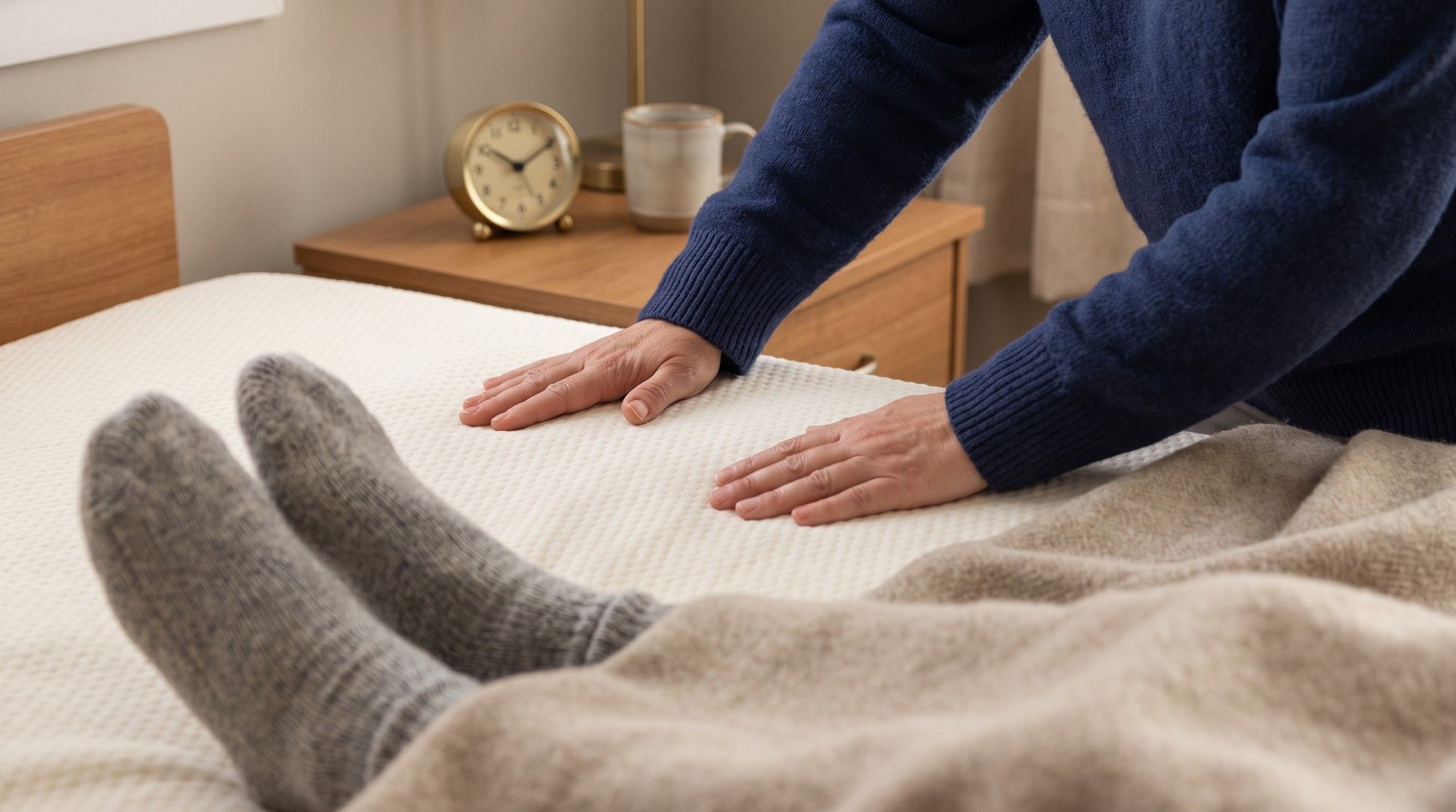
How Do Bedsores Form in a Nursing Home?
Four forces do the damage, and a well-run facility manages all four.
Pressure is the main one. When the weight of the body compresses skin and soft tissue against a mattress, a chair, or a bony prominence for long enough, the small blood vessels collapse. Tissue deep against the bone is often injured first, which is why a wound that looks small on the surface can be deep underneath.
Shear happens when the skin stays in place while the tissue underneath slides. The classic example is a resident who is propped up in bed and slowly slips down, dragging the deep tissue over the sacrum while the skin holds against the sheet. Shear tears the tiny vessels that feed the skin.
Friction is the rubbing of skin against a surface, such as being pulled across a sheet during a transfer instead of being lifted. Friction strips the outer layer of skin and makes it far more vulnerable to pressure.
Moisture from sweat, urine, or stool softens the skin and makes it break down faster. A resident left in a wet brief is at sharply higher risk, which is why incontinence care and pressure injury prevention are inseparable in a competent facility.
None of these forces is a mystery to nursing staff. Every one of them has a known countermeasure: turning, lifting rather than dragging, keeping skin clean and dry, and using support surfaces that spread the load.
Why this matters legally: when a chart shows a resident who could not move, was incontinent, and developed a sacral wound, the facility has to explain what it did about each of these known risks, and the explanation has to match its own records.
Who Is at Risk for Bedsores?
Some residents are far more likely than others to develop a pressure injury, and facilities are required to identify them on admission and reassess them regularly. The risk factors are well established.
Immobility is the biggest. A resident who cannot turn in bed, who spends long hours in a wheelchair, or who is bedbound after a stroke, a hip fracture, or advanced dementia cannot relieve pressure alone. Incontinence adds moisture and skin breakdown. Poor nutrition and dehydration weaken the skin and slow healing; a resident who is losing weight or not drinking enough is a resident whose skin is failing. Conditions that reduce blood flow or sensation, including diabetes, vascular disease, and neuropathy, mean the resident may not feel the pain that would otherwise prompt a shift in position. Thin, fragile skin in the very old, sedation, and a prior history of pressure injury all raise the risk further.
Nursing homes measure this risk with a standard tool, most often the Braden Scale, which scores sensory perception, moisture, activity, mobility, nutrition, and friction and shear. A low score means high risk, and a high-risk score is supposed to trigger a specific prevention plan.
Why this matters legally: a resident's risk score is in the chart, and a facility that documented high risk and then failed to act on it has written the first page of the case itself.

What Are the Stages of Bedsores?
Medical providers grade pressure injuries by depth, and the stage matters enormously to your legal claim. The staging system below is the one used in nursing home records and by the physicians who treat these wounds.
What Is a Stage 1 Bedsore?
The skin is intact but red, and the redness does not blanch (turn white) when pressed. On darker skin the area may look purple or blue rather than red, and it may feel warmer, firmer, or more painful than the skin around it. Caught here, a bedsore heals with basic care: pressure relief, skin protection, and attention to moisture and nutrition.
What Is a Stage 2 Bedsore?
The outer skin breaks open into a shallow wound, a blister, or an abrasion with a pink or red wound bed. It is painful but still treatable with cleaning, appropriate dressings, and, above all, keeping pressure off the site. A Stage 2 wound that is documented and treated promptly should not progress.
What Is a Stage 3 Bedsore?
The wound extends through the full thickness of the skin into the fat layer underneath. It looks like a crater. At this depth the risk of infection climbs sharply, the wound often needs debridement (removal of dead tissue) and specialised dressings, and healing can take months even with good care.
What Is a Stage 4 Bedsore?
The wound reaches muscle, tendon, or bone. Stage 4 ulcers can cause osteomyelitis (bone infection) and sepsis, a runaway bloodstream infection that is frequently fatal in elderly patients. Surgery is common, and some Stage 4 wounds never fully close.
What Are Unstageable Wounds and Deep Tissue Injuries?
Some wounds are documented as "unstageable" because dead tissue (slough or eschar) covers the wound bed and hides its true depth. Others are recorded as deep tissue pressure injuries: intact or broken skin over a dark, bruised-looking area that signals damage deep against the bone. Treat either one as a red flag of the same seriousness as a Stage 3 or 4 wound.
Here is the part facilities do not advertise: a bedsore does not skip from Stage 1 to Stage 4 overnight. Progression takes days or weeks of missed repositioning, missed skin checks, and missed chart entries. Every stage it advances is another window in which staff should have caught it.
Why this matters legally: each deeper stage is evidence of a longer period of missed care, and a wound that was first documented at Stage 3 or 4 raises the question of why nobody wrote down the two stages that came before it.
What Does a Bedsore Feel Like, and What Can a Family See?
For a resident who can feel it, a developing pressure injury is painful: a burning, aching, or itching over the site that gets worse with pressure. Many residents at the highest risk cannot report that pain because of dementia, stroke, or sedation, which is why the facility's skin checks exist.
Families can see the early signs if they know where to look. Ask to see your loved one's heels, tailbone, and hips during a visit. Look for a patch of skin that is red, purple, or darker than the surrounding skin, that stays discoloured after the pressure is removed, or that feels warm, hard, or boggy. A blister, a scrape, or an open sore over a bony area is already a Stage 2 wound. A foul odour, drainage on the sheets, or a bandage nobody has explained means the wound is further along than anyone has told you.
Also watch the things that surround a bedsore: a resident who is always in the same position when you arrive, sheets that are wet, meals left untouched, weight loss, and a call light that goes unanswered.
Why this matters legally: what you saw and when you saw it is evidence, and a dated photograph taken with dignity is often the clearest record of a wound that the facility's chart describes vaguely or not at all.
How Do Bedsores Get Infected?
An open wound over the sacrum sits inches from stool and urine. Once bacteria colonise the wound bed, a bedsore can progress from a local infection (cellulitis) to an infection of the bone beneath it (osteomyelitis) to sepsis, in which the infection spreads through the bloodstream and the body's organs begin to fail. Elderly residents have less reserve to fight sepsis, and it is one of the most common ways a bedsore becomes a wrongful death.
The warning signs of infection are fever, a wound that smells or drains pus, spreading redness, new confusion or drowsiness, a fast heartbeat, and low blood pressure. Each of those is a reason for the facility to call a physician the same day.
Why this matters legally: a chart that shows fever and drainage for days before a doctor was notified documents a second failure on top of the first, and in a death case that delay is usually the heart of the claim.
How Does Nutrition Affect Bedsores?
Skin is tissue, and tissue needs protein, calories, fluids, vitamins, and minerals to hold together and to heal. A resident who is not eating enough, is dehydrated, or is losing weight will break down faster and heal slower. Federal rules require nursing homes to maintain a resident's nutrition and hydration and to involve a dietitian when a resident is at risk. In a bedsore case, the dietary record is as important as the wound record: weight trends, meal intake percentages, supplement orders, and whether a dietitian ever saw the resident.
Why this matters legally: weight loss and a pressure injury in the same chart point to the same cause, and understaffing that leaves a resident unturned usually leaves the same resident unfed.
How Are Bedsores Prevented in Nursing Homes?
Prevention is not complicated; it is labour. A competent facility does the following for every resident at risk.
It assesses risk on admission and again on a schedule and whenever the resident's condition changes, and it writes a care plan that matches the score. It repositions the resident on a schedule, commonly every two hours in bed and more often in a chair, and it records each turn. It uses pressure-redistributing surfaces: a specialised mattress or overlay, heel protectors, and cushions in the wheelchair. It keeps skin clean and dry, changes briefs promptly, and uses barrier creams. It lifts residents for transfers instead of dragging them. It inspects the skin head to toe at least weekly and at every bath, and it documents what it finds. It keeps the resident fed and hydrated, with a dietitian involved when intake drops. And when it finds a wound, it measures it, photographs it, notifies the physician and the family, and starts treatment the same day.
Every item on that list requires a person with time to do it. Repositioning an immobile resident every two hours, around the clock, takes hands. Corporate operators that run their buildings lean are making a bet that nobody will check whether the turns written in the chart actually happened.
Why this matters legally: the care plan is a promise the facility wrote down, and the gap between the plan and the turning log is where most bedsore cases are won.
What Should the Nursing Home's Records Show?
We know these records because we spent years defending facilities with them. In a bedsore case, we look for the admission and periodic Braden assessments; the care plan and every revision of it; the nursing assistant flow sheets or turning and repositioning logs; the treatment administration records showing dressing changes; the weekly wound measurements (length, width, depth, tissue type, drainage); wound photographs; physician orders and notification notes; dietitian consults and weight records; incident reports; and the daily staffing reports for the unit.
What the absence of a record proves is often more important than what a record says. A turning log with the same initials every two hours through a shift the staffing sheet shows was covered by one aide for forty residents tells its own story. A wound that appears in the chart for the first time at Stage 4 tells another.
Once we are retained, we request the complete chart immediately. If we are not able to take a case, we will often ask the family to obtain the records themselves so that we, or another lawyer, can see what happened.
Why this matters legally: the records are the case, and the longer they sit in the facility's hands, the more chances there are for a late entry to appear.
Am I Allowed to Photograph My Loved One's Bedsore?
Yes. You are entitled to see your family member and to document their condition. Photograph the wound if you can do so with dignity, include something that shows the date, and keep the photos somewhere safe. Photograph the surroundings too if they are part of the story: a wet bed, an empty water pitcher, a call light on the floor. Records inevitably change; staff move on; a dated photograph does not.
Why this matters legally: a photograph taken by a family member is frequently the only image of the wound that was not taken by the facility, and the facility's own photographs have a way of going missing.
Bedsore Citations in California Nursing Homes
California nursing homes are inspected by the California Department of Public Health on behalf of the federal government, and a failure to prevent or treat pressure injuries is cited under federal tag F686. Our directory tracks those citations for every certified nursing home in the state, along with the facility's staffing and its state enforcement history.
Across California's 1,165 certified nursing homes, inspectors recorded 890 pressure ulcer citations in the most recent 3 years of inspection data, at 513 different facilities. You can look up any home in our California nursing home directory to see whether it has been cited for pressure ulcer care, what its inspectors found, and how its staffing compares with the state figures as published.
Why this matters legally: a facility with a prior citation for the same failure was on notice, and notice is what turns negligence into the recklessness the Elder Abuse Act punishes.
Fast Facts About Bedsores in California Nursing Homes

Why Are Bedsores Considered a Sign of Neglect?
Federal regulations require nursing homes to prevent pressure ulcers unless a resident's medical condition makes them truly unavoidable, and to give a resident who has a sore the treatment needed to heal it (42 CFR 483.25). California's own definition of neglect includes the failure to protect a resident from health and safety hazards and the failure to provide medical care (Welfare and Institutions Code 15610.57).
On admission, every facility must assess a resident's pressure ulcer risk and write a care plan around it. When a resident develops an advanced sore anyway, one of two things is usually true. Either the care plan was ignored, or the facility never staffed enough people to carry it out.
Understaffing is the engine behind most bedsore cases we see. Bedsores rarely travel alone. The same understaffing that leaves a resident in one position for hours also shows up as dehydration, weight loss, and falls. If you are seeing more than one of these problems, read our page on nursing home neglect; the pattern itself is evidence.
Are Bedsores Ever Unavoidable?
Sometimes, but the exception is narrow. Federal rules allow a facility to call a pressure ulcer unavoidable only when the resident's medical condition made it so and the facility can document that it still did everything required: timely risk assessments, a care plan that matched the risk, and staff who followed it. Residents at the very end of life, with skin that is failing as the body shuts down, are the clearest example.
That documentation burden is the facility's, not yours. In practice, when we pull the staffing reports and the repositioning logs, the "unavoidable" story tends to fall apart. A truly unavoidable sore in a well-run building is rare.
What Is the Difference Between a Stage 3 and a Stage 4 Bedsore for Your Case?
The medical difference is depth. The legal difference is what that depth proves. A Stage 3 wound tells us the facility missed the sore at Stages 1 and 2, when it was visible and treatable. A Stage 4 wound tells us the facility missed it again after that, often for weeks. Each deeper stage is another round of skin checks that did not happen and another chance to call a doctor that nobody took.
Both stages support a strong claim. Stage 4 cases tend to involve worse complications (bone infections, sepsis, amputations, death), so the damages are usually larger and the evidence of sustained neglect is usually clearer. If the facility never told you what stage the wound reached, request the wound care records in writing.
Can I Sue a Nursing Home for Bedsores in California?
Yes. A bedsore claim in California can be brought under ordinary negligence law and, where the evidence shows the facility acted recklessly, under the Elder Abuse and Dependent Adult Civil Protection Act (Welfare and Institutions Code 15600 and following). The Act exists precisely for cases like these: a dependent adult, a caretaker with a duty, and a failure to provide the care that duty required.
The facility itself is the usual defendant, because preventing pressure ulcers is the facility's legal duty, not any single aide's. Individual staff members can be named too, but the case is really about the systems above them: the risk assessments, the care plans, and the staffing decisions. In many California nursing homes, those staffing decisions are made by a corporate parent that owns or manages a chain of buildings. When budget targets set at headquarters left the floor without enough aides to turn residents, the corporate owner belongs in the case. We know where operators keep the documents that connect the budget to the bedsore.
What Can My Family Recover?
California's Elder Abuse Act gives bedsore victims tools an ordinary negligence lawsuit does not. Where the evidence shows the facility acted with recklessness or worse, the Act allows recovery of attorney's fees and costs, and it preserves damages for the victim's pain and suffering even if your loved one has passed away before or during the case.
A claim may cover the cost of hospitalisations, surgeries such as wound debridement, wound care and rehabilitation, the physical pain and mental suffering the ulcer caused, and, where a bedsore led to a fatal infection, wrongful death damages for the family. In egregious cases, punitive damages are on the table.
How Much Is a Bedsore Lawsuit Worth?
There is no fixed settlement amount for a bedsore case, and any website that quotes you one is guessing. Value depends on a handful of factors that move real cases up or down: the stage of the wound, the complications it caused, how long the neglect went on, what the facility's own records show it knew and ignored, the medical bills the wound caused, the pain your loved one endured, and whether the evidence supports the Elder Abuse Act's enhanced remedies. A facility with prior citations for the same problem faces more exposure, which is one reason we look up every building's history in our directory before the first call ends.
If you want a straight answer about your own case, call (888) 999-0169 or send us the basics through our contact page. A ten minute call is usually enough for us to tell you whether the wound you are describing supports a claim. For a fuller breakdown of how these cases are valued, see our guide to nursing home settlement values.
Can a Stage 3 or Stage 4 Bedsore Heal?
Yes, advanced bedsores can heal, but not on their own and not quickly. Stage 3 and Stage 4 wounds typically need aggressive treatment: complete pressure relief, debridement, specialised dressings, infection control, and nutrition support. Healing is measured in months, and some Stage 4 wounds never fully close.
Get a physician involved now if one is not already, and make sure it is a doctor who does not answer to the facility. Nothing on this page is medical advice; treatment decisions belong with a doctor who has examined your loved one. A legal claim does not interfere with that care. It exists to pay for it.
What We Do Differently
Thomas Wallin and the attorneys at Young & Wallin spent years defending nursing homes before switching sides. That background changes how a bedsore case gets built. We know the facility's playbook because we helped write versions of it. We know which staffing reports to demand, how wound photographs get buried, how "resident repositioned every two hours" ends up in a chart nobody actually followed, and how defense counsel values these cases behind closed doors. When we request records, we already know what should be in them and what their absence proves.
What Should I Do Right Now?
If you just discovered a serious bedsore, a few steps protect your family's case.
-
Get Medical Care From Someone Who Does Not Work for the Facility
Ask for a wound care consult or take your loved one to a physician. If there is fever, confusion, or drainage, do not wait.
-
Photograph the Wound and the Room
Date the photos. Keep them off the facility's devices.
-
Ask for the Complete Chart in Writing
Wound care notes, repositioning logs, the care plan, and the weight record. Keep a copy of your request.
-
Report the Facility to the California Department of Public Health
CDPH licenses nursing homes and investigates complaints. You can file by phone or online, you can file anonymously, and the facility may not retaliate against your loved one for a complaint. Our guide to reporting nursing home abuse in California walks through every option, and we can file the complaint for you as part of taking your case.
-
Talk to a Lawyer Before You Accept the Facility's Explanation
The version of events a facility gives families is rarely the version its own records support.
How Long Does a Bedsore Lawsuit Take?
Most nursing home cases resolve in roughly one to two years, though every case is different. The early months go to gathering records, medical review, and filing. The middle of the case is discovery: depositions of staff, production of staffing data, and expert review of the wound care. Many cases settle once the facility's own records are on the table. If a fair settlement is not offered, we try the case.
Deadlines run in the background the whole time. California generally allows two years from the injury for elder abuse and negligence claims, timing rules for claims against medical providers can differ, and claims involving government-run facilities have much shorter deadlines. Our statute of limitations guide covers the details, but the sooner a lawyer starts preserving evidence, the stronger your case.
Talk to a California Bedsore Lawyer Today
Every week that passes, wound photos get harder to find and staffing records get easier to explain away. Call (888) 999-0169 or reach us through our contact page for a free case evaluation. There is no fee unless we win, and the consultation costs you nothing either way. We serve families in all 58 California counties, and we have read these charts from both sides of the courtroom.
Other Injuries That Travel With Bedsores
If your family member also suffered any of the following, the pattern strengthens the case: nursing home neglect, dehydration and malnutrition, falls and fractures, sepsis and infections, medication errors, and wrongful death. Each has its own page in our practice area library.
Frequently asked questions
Can I Sue a Nursing Home for Bedsores in California?
Yes. If a resident developed a serious pressure ulcer because staff failed to reposition them, assess their risk, or treat the wound, the facility can be liable under California's Elder Abuse Act and ordinary negligence law. The Elder Abuse Act adds attorney's fees and enhanced damages where the neglect was reckless.
Are Bedsores Always a Sign of Nursing Home Neglect?
Not automatically, but close to it. Federal regulations treat pressure ulcers as preventable except where a documented medical condition makes them unavoidable, and facilities carry the burden of showing they did everything required. In our experience defending these cases, the "unavoidable" defense rarely survived a look at the staffing records.
What Is the Difference Between a Stage 3 and a Stage 4 Bedsore?
A Stage 3 bedsore extends through the full thickness of the skin into the fat layer. A Stage 4 bedsore goes deeper, exposing muscle, tendon, or bone, and carries a high risk of bone infection and sepsis. Legally, each deeper stage is evidence of a longer period of missed care, which generally makes the claim stronger.
How Often Should a Nursing Home Turn a Bedridden Resident?
The common standard is at least every two hours in bed and more frequently in a chair, adjusted to the resident's risk and skin condition. The schedule should be in the care plan and every turn should be recorded. A log that shows perfect two-hour turns on a shift with one aide for a full hall is a log worth questioning.
What Is the Average Settlement for a Bedsore Lawsuit?
There is no reliable average, and no honest lawyer will quote one before reviewing your records. Value depends on the stage of the wound, the complications it caused, how long the neglect lasted, and whether the evidence supports enhanced remedies under California's Elder Abuse Act. Stage 4 cases involving sepsis, surgery, or death are generally the most valuable.
Can a Bedsore Cause Death?
Yes. An untreated pressure injury can lead to osteomyelitis and sepsis, and sepsis is a leading cause of death in elderly nursing home residents with advanced wounds. Where a bedsore led to a fatal infection, the family may bring a wrongful death claim alongside the elder abuse claim.
Should I Report the Bedsore to the State?
Yes. Report it to the California Department of Public Health, which investigates complaints against nursing homes, and to the Long-Term Care Ombudsman. A substantiated citation is powerful evidence, reporting can be anonymous, and the facility may not retaliate. Our reporting guide explains each step.
How Long Do I Have to File a Bedsore Lawsuit in California?
Generally two years from the injury, though the deadline can be shorter or longer depending on the facts, including when the harm was discovered and whether a government-run facility is involved. Records disappear and staff scatter quickly, so the practical deadline is much sooner than the legal one.
Do I Need a Lawyer to Report a Bedsore?
No. Anyone can report a nursing home to CDPH or the Ombudsman. A lawyer becomes important when you want to hold the facility accountable for the harm, because a complaint punishes the facility and a civil claim compensates your family. The two work well together.

Free Case Evaluation
Confidential. No obligation. Available 24/7.