

My Mother Was Dehydrated or Malnourished in a Nursing Home: Should I Call a Lawyer?
Quick Answer: Food and water are the two most basic things a nursing home owes a resident, and a resident who ends up dehydrated or wasting away in a facility's care has almost always been left without help at the table or the bedside. Federal and California law make that help the facility's duty and treat the failure as neglect. If your loved one suffered dehydration or malnutrition in a California nursing home, you may have a claim under the state's Elder Abuse Act, which carries remedies far stronger than an ordinary injury lawsuit. Call (888) 999-0169 or send us a message for a free, confidential consultation. You pay nothing unless we win.
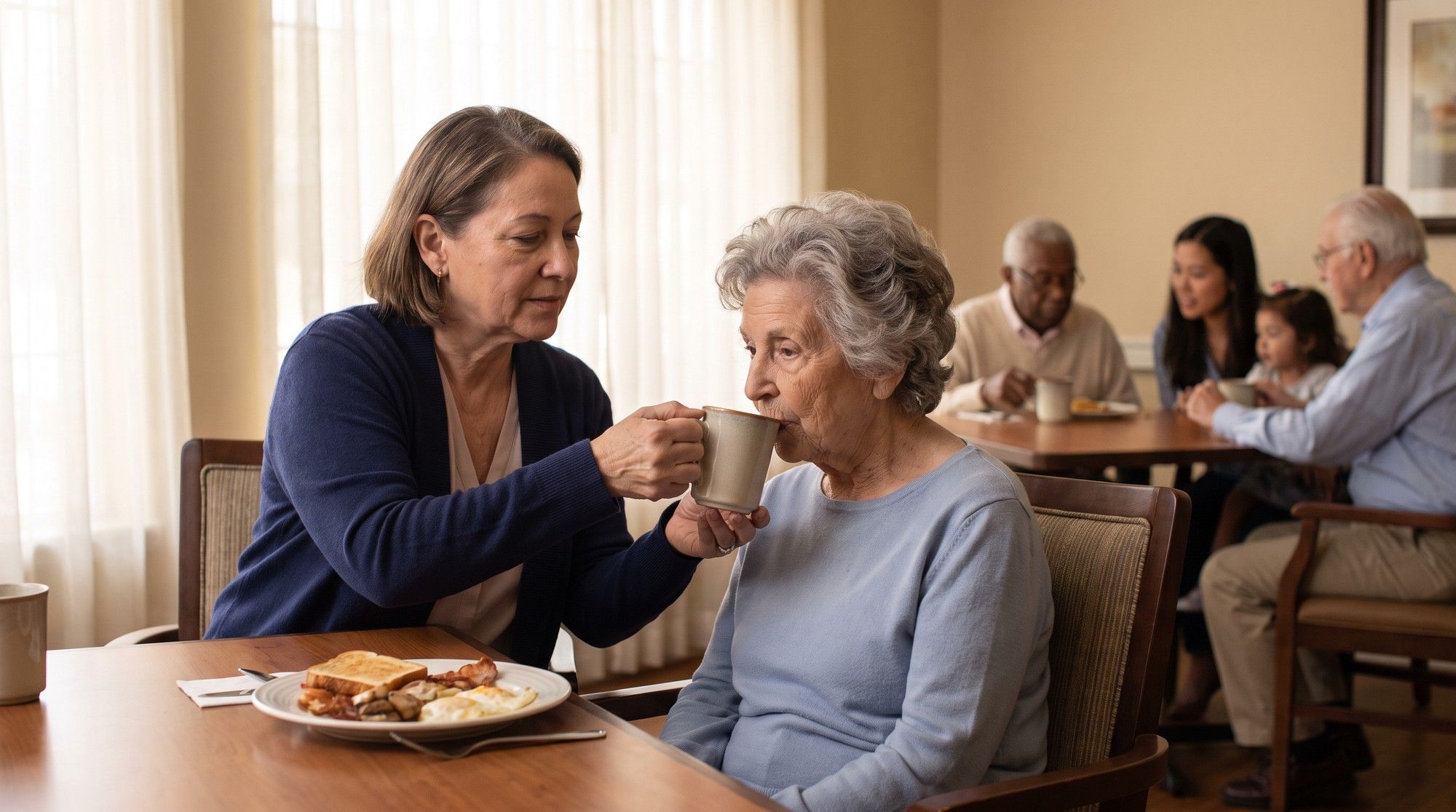
The facility will tell you that your father stopped eating, that he refused fluids, that he was old and declining and nothing could be done. We spent years defending nursing homes, and we can tell you what the facility's own lawyers know: dehydration and malnutrition are rarely accidental. They are what happens when a resident who cannot eat or drink alone is left alone with a tray.
This Injury in the California Record
What Are Dehydration and Malnutrition?
Dehydration means the body has lost more water than it has taken in. In an older adult the margin is thin: total body water falls with age and the thirst signal weakens, so a resident may be running dry without ever asking for a drink. That is why the law puts the burden of offering and tracking fluids on the facility rather than on the resident.
Malnutrition means the body is not getting enough protein, calories, vitamins and minerals to maintain itself. It shows up as weight loss, muscle wasting, weakness, skin that fails to heal, and a body that cannot fight infection. The two conditions travel together: a resident who is not being helped to eat is usually not being helped to drink either.
Why this matters legally: because intake is measurable and the facility is required to measure it, dehydration and malnutrition are among the clearest windows into whether a resident was actually cared for.

How Do Dehydration and Malnutrition Happen in a Nursing Home?
Many nursing home residents cannot feed or hydrate themselves reliably. They may have dementia and forget to eat, difficulty swallowing, or weakness that makes lifting a cup hard. That is the ordinary population of a skilled nursing facility, and meeting those needs is the job. Here is how the job goes wrong.
Unassisted Meals
A tray set down in front of a resident who cannot cut, lift, or bring food to the mouth is not a meal. Helping one dependent resident eat can take a large part of an hour. When that aide is not there, the tray is collected barely touched, and often nobody records that the resident did not eat.
Understaffing at Mealtimes
When one aide is assigned a dozen residents at dinner, the arithmetic does not work, and the residents who need the most help are the ones who quietly get skipped. Facilities know their dining room demand to the person, because their own assessments say who needs full assistance. A schedule that does not match that demand is a decision, not an accident.
Swallowing Problems and the Wrong Diet Texture
Strokes, Parkinson's disease, dementia and frailty all weaken the swallow, and a speech therapist orders a diet texture and liquid thickness the resident can manage. When the kitchen sends regular food to a pureed-diet resident, or thin liquids to a resident ordered thickened ones, the resident either cannot eat safely or will not eat at all. Intake collapses, and choking and aspiration pneumonia follow close behind.
Fluids Out of Reach or Withheld
A water pitcher on the far side of the bedside table is no water at all to a resident who cannot reach it, lift it, or pour from it. Federal rules expect fluids to be offered, not merely present. Fluids also get cut back on purpose. A resident embarrassed by incontinence may stop drinking; an aide who is behind may be slow to offer fluids to the resident who will need changing afterward. Both produce the same chart: fluid intake drifting down, urine darkening, and no one asking why.
Dementia and Appetite
A resident with dementia may forget the tray is in front of them, may not recognize food, may be unable to sequence the steps of eating, or may be overwhelmed by a noisy dining room. These residents eat when someone cues them, one bite at a time. They do not eat when the tray is set down and collected forty minutes later.
Medication Side Effects
Many common medications dull appetite, dry the mouth, or cause nausea. Diuretics pull water out of the body by design. Sedatives and antipsychotics leave a resident too drowsy to eat. A resident who loses weight or dries out after a new prescription should trigger a physician and pharmacist review; where it never happens, the drug keeps working against the resident month after month.
Why this matters legally: every one of these causes is known, assessed on admission, and addressed in the care plan, so a resident who dehydrates or wastes anyway forces the facility to explain why the plan it wrote was not carried out.

Who Is at Risk for Dehydration and Malnutrition?
Anyone who depends on staff to eat or drink is at risk by definition. Residents with dementia, stroke, Parkinson's disease, or any condition that affects swallowing, hand use, or attention are at higher risk still. So are residents with poorly fitting dentures or mouth pain, depression, diuretics or sedating medications, diarrhea, vomiting, fever, a draining wound, or an existing pressure injury.
Federal law requires the facility to identify these risks in a comprehensive assessment on admission and at set intervals afterward, and to write a care plan that answers each one with a specific task.
Why this matters legally: the risk is written down in the facility's own assessment, and a facility that documented a resident as needing full feeding assistance and then let them lose weight has written the first page of the case itself.
What Can a Family See?
Families are often the first to notice, because you know what your loved one looked like a month ago and the weekend aide does not. Look at the body first. Clothes, rings and dentures that no longer fit are weight loss made visible. Sunken eyes, cracked lips, skin that stays pinched when gently lifted on the back of the hand, and dark, strong-smelling urine are signs of dehydration.
New or worsening confusion, unusual sleepiness, dizziness on standing, and weakness can all be the brain and the blood pressure responding to a lack of fluid. A loved one who says they are hungry or thirsty is telling you something the chart may not.
Then look at the mealtime. A tray out of reach, a meal collected almost untouched, a water pitcher still full at the end of the day, a resident who is never seen being helped to eat: each is a sign that the plan on paper is not happening on the floor.
Finally, watch for what follows. Repeated urinary tract infections, a new pressure sore, a fall, and a hospital trip for dehydration, a high sodium level, or "failure to thrive" are the consequences of intake that fell short for weeks. Our guide to the signs of nursing home neglect covers what these symptoms mean and what to document.
Why this matters legally: what you saw and when you saw it is evidence, and a dated note from a family visit is often the only record of a resident's condition that the facility did not write.
What Do the Hospital Labs Mean?
Many families first learn how bad things were from an emergency room doctor. A high blood sodium level, which doctors call hypernatremia, usually means the body lost more water than it took in. In a resident who depends on staff for every drink, hypernatremia on hospital admission points to fluids that were not offered, not given, or not tracked. Dehydration severe enough to raise sodium does not develop in an afternoon. It builds over days.
Kidney values tell a similar story: when the body is short of water, blood urea nitrogen and creatinine climb, and "acute kidney injury" in the chart means the kidneys were being starved of fluid. Nutrition shows up in a different set of numbers. Low albumin and prealbumin reflect weeks of poor protein intake rather than a bad day. A body weight far below what the nursing home last recorded, or a diagnosis of "failure to thrive" or "protein-calorie malnutrition," is a physician's plain judgment of what the resident's body had been through.
Ask the hospital for copies of the admission labs. The hospital has no reason to soften what it found, which makes those records powerful evidence.
Why this matters legally: hospital labs are an independent measurement of the resident's condition on the day they left the facility, and a sodium level or a weight the nursing home's chart cannot explain is the beginning of the case.
What Complications Follow Dehydration and Malnutrition?
Urinary tract infections are often the first. Concentrated urine invites bacteria, and repeated infections in the same resident are a hydration problem until proven otherwise. Kidney injury follows when the kidneys are starved of blood flow for long enough; much of it is reversible with fluids given in time, but repeated episodes leave lasting damage.
Confusion and delirium arrive as blood chemistry shifts. Families are sometimes told their loved one's dementia is "progressing" when the real cause is a sodium level that would clear with water. Falls come next: low blood pressure on standing, weakness from lost muscle, and confusion combine to put a resident on the floor, and a fractured hip is often traceable to intake that had been falling for weeks.
Pressure injuries develop faster and heal slower in a body without protein, calories and fluid, and malnutrition and bedsores appear together so often that we treat one as a reason to look for the other. Infections of every kind take hold more easily in a malnourished body, which is why malnutrition feeds into sepsis. And where none of this is caught in time, dehydration and malnutrition are causes of death, sometimes recorded honestly and sometimes hidden behind a final diagnosis of pneumonia or kidney failure.
Why this matters legally: each complication is a separate injury with its own record, and a chain that runs from missed meals to a urinary infection to a fall to a hospital death is the outline of a wrongful death claim.
When Is Weight Loss Neglect, and When Is It Not?
Not all weight loss in a nursing home is neglect. Some residents lose weight in the late stages of dementia or other terminal illness even with excellent care, and some competent residents genuinely refuse food.
What the law requires is that the facility see the weight loss, respond, and document both. Federal survey guidance uses the federal significant weight loss definition, on the order of five percent of body weight in a month or ten percent in six months, as a trigger the facility must act on: recording intake, adding supplements, involving the dietitian and physician, reviewing medications, and telling the family. A true refusal triggers a response too: staff should find out why and try again, and the chart should show it.
When the chart shows weight dropping month after month with no response, or no weights recorded at all, or "refused meal" written shift after shift with nothing done about it, that is not disease. That is nobody watching.
Why this matters legally: the facility's own guidance defines the point at which it had to act, so the weight log fixes the date the duty was triggered and the rest of the chart shows whether anyone answered it.
What Does Proper Nutrition and Hydration Care Look Like?
Prevention is not complicated; it is labor. A competent facility assesses the resident on admission and at every reassessment, and writes a care plan that assigns each need to a specific task and staff role. It provides the help the plan calls for at every meal, whether that is opening containers, cueing, or full hand-over-hand feeding, and serves the ordered texture and thickness every time. It offers fluids throughout the day, not just with meals, and places them within reach. It records what portion of each meal the resident ate and, for at-risk residents, how much fluid went in and how much came out. It weighs the resident on a schedule, on the same scale, and more often when there is a concern. It calls the dietitian when intake or weight slides, and the physician and the family when the numbers cross the line.
Every item on that list requires a person with time to do it. Feeding a floor full of dependent residents takes hands in the dining room three times a day. California sets minimum direct care staffing hours for skilled nursing facilities because none of this happens without enough aides. Corporate operators that run their buildings lean are betting that nobody will add up the intake records. We add them up.
Why this matters legally: the care plan is a promise the facility wrote down, and the gap between what it promised at each meal and what the intake sheet shows is where most of these cases are won.
What Should the Nursing Home's Records Show?
We know these records because we spent years defending facilities with them. The dietary record should show the admission nutrition assessment, the ordered diet and any texture or thickness modification, supplement orders, and every change to the diet and who ordered it. The weight log should show a weight on admission and on a regular schedule after that, with the trend flagged when it crosses the significant weight loss threshold. The meal intake record should show, for every meal, the portion of the tray the resident ate and how much they drank. The intake and output sheets, for any resident on fluid monitoring, should show each shift's fluids in and urine out, with totals that someone reviewed. The dietitian's notes should show a consult on admission and a prompt visit whenever weight or intake fell, with recommendations that made it into the care plan and physician orders. Around those, we look at the aide flow sheets, the speech therapy evaluations, physician notification notes, and the daily staffing reports for the unit.
What the absence of a record proves is often more important than what a record says. A month with no weight is a month nobody weighed the resident. An intake sheet that reads "ate all" at every meal for a resident who arrived at the hospital with severe malnutrition was filled in, not observed. "Resident refused" written shift after shift with no follow-up is neglect wearing a paper trail. And a chart with no intake records at all, for a resident the facility itself assessed as needing full feeding assistance, tells us nobody was tracking whether that resident ate.
Once we are retained, we request the complete chart immediately. If we are not able to take a case, we will often ask the family to obtain the records themselves so that we, or another lawyer, can review them.
Why this matters legally: the records are the case, and the longer they sit in the facility's hands, the more chances there are for a late entry or a rewritten intake sheet to appear.
Am I Allowed to Photograph My Loved One's Condition?
Yes. Photograph what you can with dignity: the loose clothing, the cracked lips, the untouched tray, the pitcher out of reach. Include something that shows the date, and keep a written log of every visit: what was left on the tray, whether anyone helped them eat, and what staff told you.
Why this matters legally: a family's photographs and visit notes have a way of contradicting an intake sheet that reads "ate well."
Dehydration and Malnutrition Citations in California Nursing Homes
California nursing homes are inspected by the California Department of Public Health on behalf of the federal government. A failure to maintain a resident's nutrition and hydration is cited under federal tag F692, unsafe food handling under F812, and a failure to keep enough nursing staff on duty under F725. Our directory tracks those citations for every certified nursing home in the state.
Across California's 1,165 certified nursing homes, inspectors recorded 436 nutrition and hydration citations in the most recent 3 years of inspection data, at 358 different facilities. In the same window, inspectors recorded 1,977 food safety citations and 239 sufficient staffing citations. You can look up any home in our California nursing home directory to see whether it has been cited for nutrition and hydration care and what its inspectors found.
Why this matters legally: a facility with a prior citation for the same failure was on notice, and notice is what turns negligence into the recklessness the Elder Abuse Act punishes.

Fast Facts About Dehydration and Malnutrition in California Nursing Homes
Why Are Dehydration and Malnutrition Considered Neglect Under California Law?
Federal regulations require facilities to ensure that residents maintain acceptable nutritional status and receive sufficient fluid to maintain proper hydration and health, and to provide the assistance each resident needs to eat and drink (42 CFR 483.25). Separate federal rules govern food and nutrition services, including a qualified dietitian and safe food handling. California's Elder Abuse and Dependent Adult Civil Protection Act defines neglect to include the failure to provide food and water and the failure to assist with personal needs (Welfare and Institutions Code 15610.57). The Patients' Bill of Rights for skilled nursing facilities (Health and Safety Code 1599 and following, detailed at 22 CCR 72527) guarantees care that meets professional standards, and Health and Safety Code 1430(b) lets a resident sue a facility directly for violating those rights. Where a facility's conduct rises to criminal neglect, California's elder abuse statute (Penal Code 368) can apply.
When dehydration or malnutrition happens anyway, either the care plan was ignored or the facility never staffed enough people to carry it out. Understaffing is the engine behind most of these cases, and it rarely produces only one injury. The same shift that leaves a resident unfed leaves the same resident unturned, which is why dehydration, bedsores and falls so often appear in the same chart. If you are seeing more than one of these problems, read our page on nursing home neglect; the pattern itself is evidence.
Can I Sue a Nursing Home for Dehydration or Malnutrition in California?
Yes. A claim can be brought under ordinary negligence law and, where the evidence shows the facility acted recklessly, under the Elder Abuse and Dependent Adult Civil Protection Act (Welfare and Institutions Code 15600 and following). The Act exists for cases like these: a dependent adult, a caretaker with a duty, and a failure to provide the food, water and assistance that duty required. Recklessness is usually proven from the facility's own paper. A facility that assessed a resident as needing full feeding assistance, scheduled one aide for the dining room, watched the weight log fall for three months, and did nothing has not made a single mistake. It has made a decision, repeatedly, with the resident's condition in front of it.
Who Is Liable for Dehydration and Malnutrition in a Nursing Home?
The facility itself is the usual defendant, because keeping a resident nourished and hydrated is the facility's legal duty, not any single aide's. Individual staff members and administrators can be named too, but the case is really about the systems above them: the assessments, the care plans, the kitchen, and the staffing decisions.
In many California nursing homes, those staffing decisions are made by a corporate parent that sets each building's labor budget from headquarters. When the budget left the dining room without enough aides, the corporate owner belongs in the case, and we know where operators keep the documents that connect the budget to the weight log. A hospital, hospice or physician that shared responsibility for the resident may also carry part of the liability.
What Can My Family Recover?
California's Elder Abuse Act gives families of dehydration and malnutrition victims remedies an ordinary negligence claim does not. Where the evidence shows the facility acted with recklessness, oppression, fraud or malice, the Act allows recovery of attorney's fees and costs, and it preserves damages for the victim's pain and suffering even after death.
A claim may cover the cost of hospitalization and treatment; the physical suffering, hunger, thirst, confusion and decline the neglect caused; and, where dehydration or malnutrition contributed to death, wrongful death damages for the family. In egregious cases, punitive damages are on the table.
How Much Is a Dehydration or Malnutrition Case Worth?
There is no fixed settlement amount for these cases, and any website that quotes you one is guessing. Value depends on a handful of factors that move real cases up or down: how severe the dehydration or weight loss became, what complications followed, whether the neglect contributed to a death, how long the decline went on unanswered, what the facility's own records show it knew and ignored, the medical bills and suffering the neglect caused, whether the evidence supports the Elder Abuse Act's enhanced remedies, and who owned and staffed the facility. A facility with prior citations for nutrition, hydration or staffing faces more exposure.
If you want a straight answer about your own case, call (888) 999-0169 or send us the basics through our contact page. For a fuller breakdown, see our nursing home settlement value guide.
What If My Loved One Had a Feeding Tube?
A feeding tube does not remove the facility's duty; it changes it. Staff must deliver the prescribed formula and water flushes on schedule, keep the site clean, position the resident to prevent aspiration, and monitor weight and labs. Dehydration or malnutrition in a tube-fed resident points to skipped feeds or flushes, an order never adjusted, or monitoring that never happened, and the administration record will show which.
Nothing on this page is medical advice; treatment decisions belong with a physician who has examined your loved one. A legal claim does not interfere with that care.
What We Do Differently
Thomas Wallin and the attorneys at Young & Wallin spent years defending nursing homes before switching sides. That background shapes how a dehydration or malnutrition case gets built. We know how "resident refused meal" gets written, over and over with no follow-up, to shift blame onto the person who was supposed to be helped, and how intake percentages get filled in at the end of a shift by an aide who was not in the room. When we request records, we already know what should be there and what its absence proves, and we know how to follow responsibility past the facility's license holder to the corporate owner that set the staffing budget.
What Should I Do Right Now?
A few steps protect your loved one's health and your family's case.
-
Get Medical Care From Someone Who Does Not Work for the Facility
If there is confusion, weakness, or a fever, do not wait. If your loved one was hospitalized, request the admission labs.
-
Photograph and Write Down What You See
Date the photos and the visit log. Note the tray, the pitcher, the clothing, and whether anyone helped with the meal.
-
Ask for the Complete Chart in Writing
Weight records, intake sheets, the nutrition care plan, dietitian notes, and physician orders. A conversation with the administrator does not become evidence; a written request for the chart does.
-
Report the Facility to the California Department of Public Health
You can file anonymously, and the facility may not retaliate against your loved one for a complaint. Our guide to reporting nursing home abuse in California walks through every option, and we can file the complaint for you as part of taking your case.
-
Talk to a Lawyer Before You Accept the Facility's Explanation
The version of events a facility gives families is rarely the version its own intake sheets and staffing reports support.
How Long Does a Dehydration or Malnutrition Case Take, and What Are the Deadlines?
Most nursing home cases resolve in roughly one to two years, though every case is different. The early months go to gathering records, expert review, and filing. The middle is discovery: depositions of aides, nurses and the dietitian, and production of staffing and intake data. Many cases settle once the facility's own weight log and staffing reports are on the table. If a fair settlement is not offered, we try the case.
California generally allows two years from the injury or death for elder abuse and negligence claims, timing rules for claims against medical providers can differ, and claims involving government-run facilities have much shorter deadlines. The clock can start earlier than families expect. Our statute of limitations guide covers the details, but the sooner a lawyer starts preserving evidence, the stronger your case.
Talk to a California Dehydration and Malnutrition Lawyer Today
Intake charts and weight logs are the heart of these cases, and they are exactly the records that get thin or disappear. Call (888) 999-0169 or reach us through our contact page for a free case evaluation. There is no fee unless we win. We serve families in all 58 California counties, and we have read these charts from both sides of the courtroom.
Other Injuries That Travel With Dehydration and Malnutrition
If your family member also suffered any of the following, the pattern strengthens the case: nursing home neglect, bedsores, falls and fractures, choking and aspiration, sepsis and infections, medication errors, and wrongful death. Each has its own page.
Frequently asked questions
Can I Sue a Nursing Home for Dehydration or Malnutrition in California?
Yes. If a resident became dehydrated or malnourished because staff failed to monitor their intake, provide feeding assistance, or follow the nutrition care plan, the facility can be liable under California's Elder Abuse Act and ordinary negligence law.
What Are the Signs of Dehydration and Malnutrition in a Nursing Home Resident?
The most common signs are unexplained weight loss, loose clothing or dentures, sunken eyes, dry mouth and cracked lips, dark urine, new confusion or weakness, untouched meal trays, and repeat urinary infections. Families often spot these changes before staff document them.
Is Unexplained Weight Loss in a Nursing Home a Sign of Neglect?
Very often, yes. Nursing homes are required to monitor weight and nutritional status, so significant unexplained weight loss usually means that monitoring failed or that a resident was not getting the feeding help they needed. The records typically show which.
What Does a High Sodium Level Mean in a Nursing Home Resident?
A high blood sodium level, called hypernatremia, usually means the resident lost more water than they took in over days, not hours. When it shows up on hospital admission from a nursing home, it is strong evidence that staff were not offering and tracking fluids.
Are Nursing Homes Required to Help Residents Eat and Drink?
Yes. Federal regulations (42 CFR 483.25) require facilities to maintain each resident's nutrition and hydration and to provide the assistance needed to eat and drink, and California law defines the failure to provide food and water as neglect. A resident who needs one-on-one feeding help must receive it at every meal.
What Is the Average Settlement for a Nursing Home Dehydration or Malnutrition Case?
There is no reliable average, and any site quoting one is guessing. Value depends on the severity of the harm, whether the neglect contributed to a death, the strength of the records, and whether the evidence supports enhanced remedies under the Elder Abuse Act.
How Do I Report Suspected Dehydration or Malnutrition in a California Nursing Home?
File a complaint with the California Department of Public Health, which licenses and inspects nursing homes, and consider contacting the local long-term care ombudsman. Our guide to reporting nursing home abuse in California explains each step, and we can file the complaint for you.
How Long Do I Have to File a Case in California?
Generally two years from the injury or death, though the deadline can vary with the facts, including when the harm was discovered and whether a government-run facility is involved. Our statute of limitations guide covers the details, but contact a lawyer as soon as you can.

Free Case Evaluation
Confidential. No obligation. Available 24/7.