

I Think My Loved One Is Being Neglected: Should I Call a Nursing Home Neglect Lawyer?
Quick Answer: Nursing home neglect is care that was promised, planned, and paid for but never delivered: the missed turn, the untouched tray, the call light nobody answered. California law treats it as a form of elder abuse, not a customer service problem, and the Elder Abuse Act gives families remedies an ordinary injury lawsuit does not. Most neglect traces back to a staffing decision made far above the floor, and the facility's own records usually prove it. Call (888) 999-0169 or send us a message for a free, confidential consultation. You pay nothing unless we win.
Neglect rarely looks like a crime scene. It looks like a mother who has lost weight since spring. A call light that goes unanswered for most of an hour. Sheets that were not changed, medications that were not given, a chart that swears everything happened on schedule. We spent years defending nursing homes, so we know how facilities explain those things away, and we know the truth behind the explanations: most neglect is not a bad employee having a bad day. It is a staffing budget, set in a corporate office, that made adequate care impossible. This page explains what neglect is, what your family can see, what the records should show, and what you can do about it.
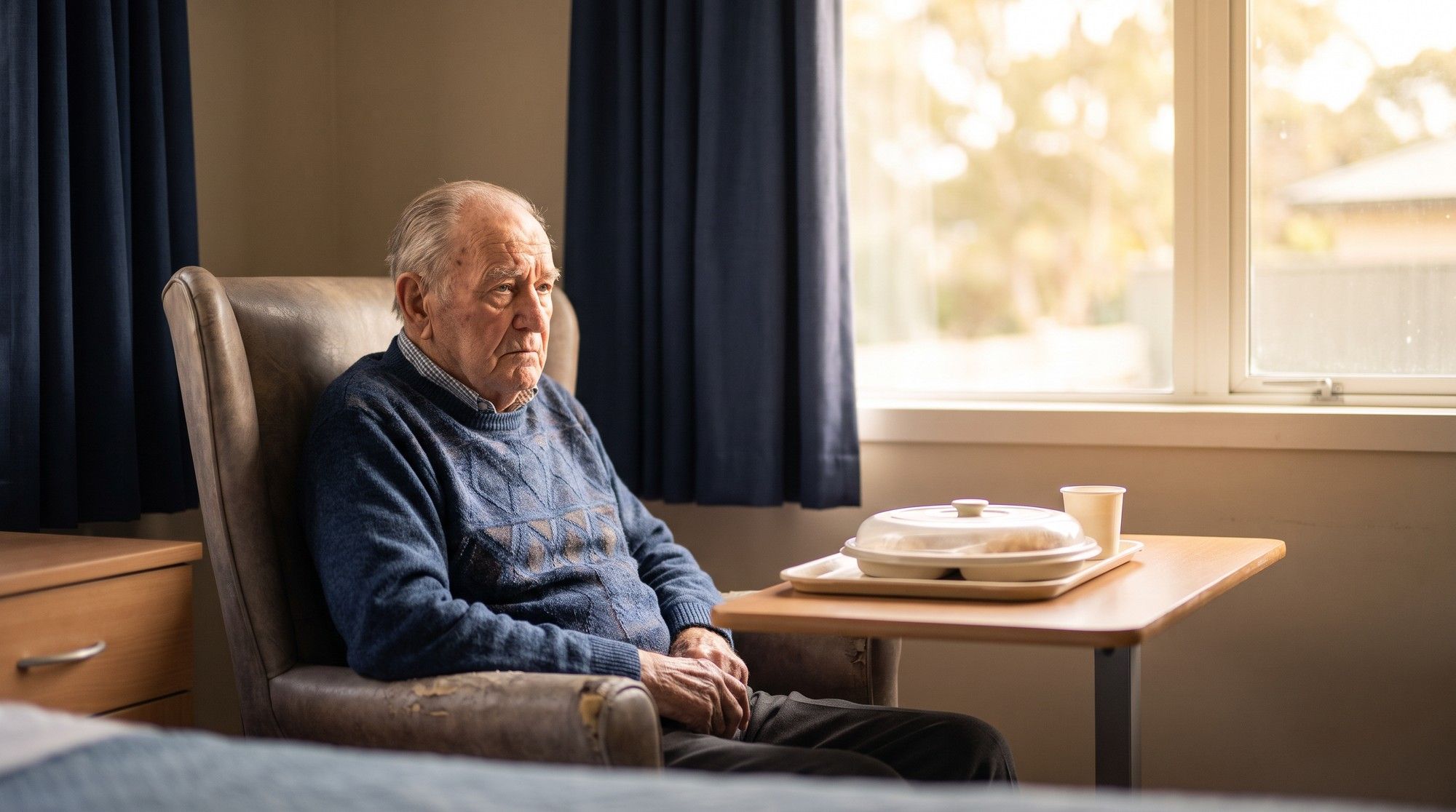
This Injury in the California Record
What Is Nursing Home Neglect?
California law defines neglect as a caregiver's failure to provide the basic care a reasonable person in the same position would provide. Welfare and Institutions Code 15610.57 spells out what that includes: failure to assist with personal hygiene, failure to provide food, clothing, or shelter, failure to provide medical care, failure to protect a resident from health and safety hazards, and failure to prevent malnutrition or dehydration.
A facility does not have to strike a resident to break the law. Letting a resident sit in soiled clothing, skipping wound checks, or serving meals a resident cannot physically eat all qualify. Neglect is defined by omission, and omission is measured against a plan. Every resident has a written care plan that says what care she needs, how often, and by whom. Neglect is the distance between that plan and what actually happened.
Why this matters legally: because the care plan is the facility's own written statement of what your loved one needed, the facility cannot later argue it did not know.
How Does Neglect Happen in a Nursing Home?
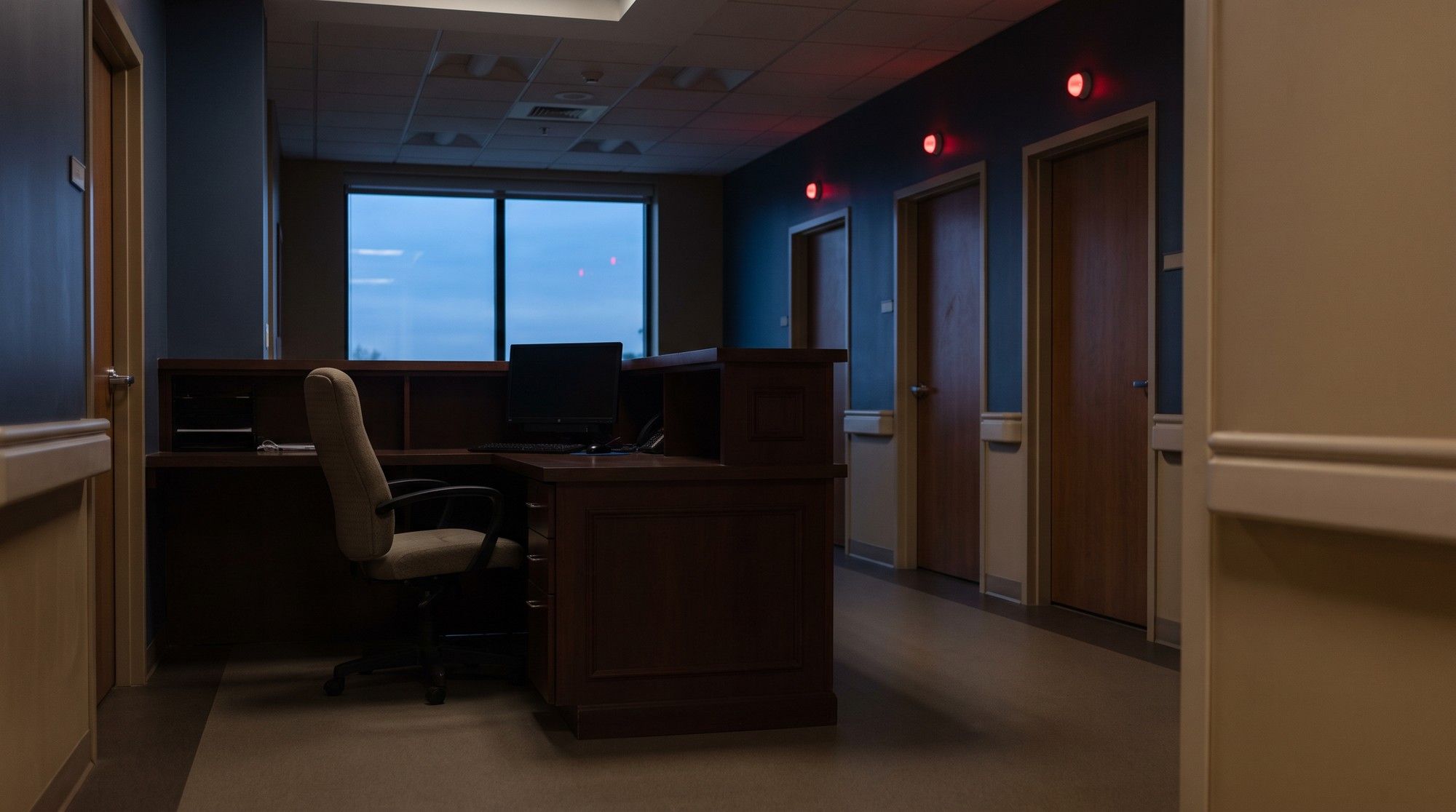
Neglect happens when the number of hands on a unit falls below the number of tasks the care plans require, and it happens the same way in building after building.
An aide arrives for a shift with more residents than the schedule was supposed to allow, because a coworker called out and nobody replaced her. Every resident on her list needs help in the next hour: getting up, getting to the bathroom, getting fed, getting turned. She does what she can in the order the emergencies arrive, and the residents who cannot ask for help get what is left. At the end of the shift the flow sheet gets filled in with the care the plan called for rather than the care that took place. Repeat that shift for weeks and the results are predictable: a pressure sore, a weight loss, an infection nobody noticed until the fever started, a fall.
Why this matters legally: when the same shortfall appears across a whole unit, the case stops being about one aide and becomes a case about the people who set the staffing level.
Who Is at Risk for Neglect?
Every resident depends on staff for something, but some depend on them for everything, and those are the residents neglect finds first. Residents with dementia cannot report what they did not receive and often cannot ask for it. Residents who are bedbound or chairbound after a stroke, a hip fracture, or advanced illness cannot reach a water pitcher, shift their own weight, or get to the bathroom. Residents who need help eating go hungry when nobody sits with them through a meal. Residents who are incontinent depend on someone to notice and change them. Residents with no regular visitors are at higher risk, because family presence is a form of supervision the facility does not have to pay for.
Why this matters legally: the chart records exactly how dependent your loved one was, and the more dependent the resident, the less room the facility has to argue that the missed care did not matter.
What Are the Forms of Nursing Home Neglect?
Neglect takes several forms, and most families who call us are seeing more than one.
What Is Personal Care Neglect?
Personal care means the activities of daily living: bathing, dressing, grooming, toileting, transferring, and eating. Federal rules require a facility to help a resident who cannot perform them, and to make sure her abilities do not decline because nobody helped her keep them. Personal care neglect is the resident who has not been bathed in a week, or who is left in bed all day because getting her up takes two aides and there was only one.
What Is Medical Neglect?
Medical neglect is the failure to provide or follow through on medical care: medications not given or given late, a wound not dressed, a physician not called when a resident's condition changes, a fever or new confusion that went unreported for days, weights not taken, vital signs charted at the same values shift after shift.
What Is Nutritional Neglect?
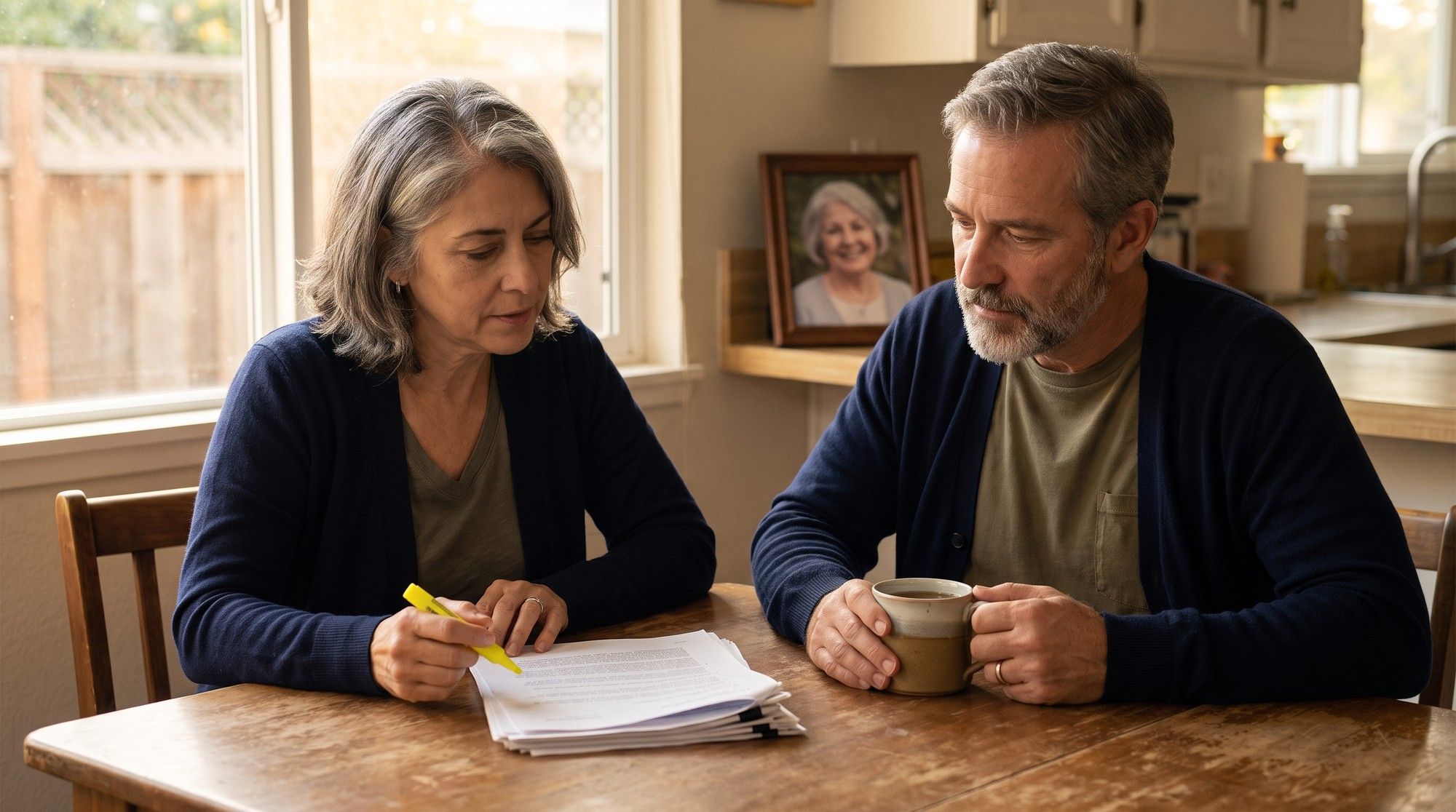
A resident who cannot feed herself needs someone to sit with her through the meal. A resident with swallowing problems needs food in the texture her speech therapist ordered. A resident who is losing weight needs a dietitian and a plan. Nutritional neglect is the tray picked up untouched, the water pitcher across the room, the weight log showing steady loss with no dietitian note, and the resident who is drowsy and confused because she is dehydrated. It is one of the easiest forms to prove, because the facility's own weight records document it.
What Is Hygiene Neglect?
Hygiene neglect deserves its own name because of what it leads to. A resident left in a wet or soiled brief develops skin breakdown, urinary tract infections, and pressure injuries. A resident whose mouth is not cleaned develops dental infections and aspiration pneumonia. Bedding that is not changed and a resident who is presentable only on the days the family is expected point in the same direction.
What Is Supervision Neglect?
Federal rules require a facility to provide the supervision each resident needs to prevent accidents. Supervision neglect is the fall-risk resident left alone in the bathroom, the resident with dementia who walked out an unlocked door, the resident who choked at a meal nobody was watching, and the known aggressive resident left unsupervised on a unit of vulnerable people.
What Is Social and Emotional Neglect?
Residents are entitled to more than being kept alive. Federal rules require activities that meet each resident's interests and require staff to treat residents with dignity. Social and emotional neglect is the resident left in her room all day with the television on and no one speaking to her, the resident ignored when she calls out, the resident never taken outside or included in anything. Isolation produces depression, withdrawal, and a decline in appetite and function that the facility then calls old age.
These forms rarely appear alone, because they share a cause. The shift with no time to bathe a resident has no time to feed her, answer her call light, or sit with her.
Why this matters legally: each form of neglect corresponds to a federal requirement the facility certified it would meet, and when several appear in the same chart, the pattern itself is evidence of a staffing failure rather than an isolated mistake.
What Warning Signs Can a Family See?
Families almost always sense neglect before they can name it, and the signs are visible on an ordinary visit if you know what to look for.
Watch your loved one's body. Weight loss, complaints of hunger or thirst, cracked lips, and new drowsiness or confusion can signal dehydration or malnutrition. Look at the heels, tailbone, and hips for redness or open skin. Look for bruises or injuries nobody can explain. A loved one who is foggy or "not herself" may be overmedicated, and infections that keep coming back point to hygiene that is not happening.
Watch the room and the routine. Unwashed hair, long nails, soiled bedding, and a smell of urine are hygiene neglect. A resident who is always in the same position when you arrive may not be turned when you are gone. An empty water pitcher, a tray removed untouched, a call light that goes unanswered while you sit there, and a room that looks presentable only after you complain are all worth writing down. Aides who seem rushed, who rotate constantly, or who cannot answer basic questions about your loved one are telling you what the staffing sheet will confirm.
None of these proves neglect by itself. Two or three together are a reason to start writing down what you see, with dates, and to ask a physician who does not work for the facility to examine your loved one.
Why this matters legally: what you saw, when you saw it, and what you were told is evidence, and a family's dated notes are often the only account of daily life on the unit that was not written by the facility.
Why Is Understaffing the Engine Behind Neglect?
Every form of neglect described above is a task somebody did not have time to do. That is why the first document we want in a neglect case is not the chart. It is the staffing sheet.
California requires skilled nursing facilities to provide at least 3.5 direct care hours per resident per day (Health and Safety Code 1276.65). Meeting that number costs money, and labor is the largest line item in a nursing home budget. When a corporate operator wants wider margins, understaffing is the fastest lever to pull, and it is pulled quietly: a position left open, a call-out not replaced.
The federal government measures staffing too. Every certified nursing home submits payroll-based staffing data to the Centers for Medicare and Medicaid Services, which publishes each facility's nurse staffing hours per resident day, weekend staffing, and turnover. Across California's 1,165 certified nursing homes, the published data shows 4.52 total nurse staffing hours per resident day on average and 36.7 average nursing staff turnover, and 79 facilities carry the lowest federal staffing rating. Any building's own figures are in our California nursing home directory as published.
Understaffed shifts force impossible choices. An aide responsible for a full hall cannot reposition everyone every two hours, answer call lights, help with meals, and document all of it honestly. So corners get cut, and then the documentation gets creative.
Why this matters legally: federal law requires sufficient staff to meet every resident's needs, and a facility that ran below its own budgeted hours, or below the state's minimum staffing rule, while charting complete care has documented both the neglect and the reason for it.
What Does Proper Care Look Like?
A competent facility assesses each resident on admission and on a schedule, writes a care plan that says what she needs, and staffs each shift so the plan can be carried out. Aides help residents bathe, dress, toilet, and eat on the schedule the plan sets, and record what they did. Residents who cannot move are turned. Residents who cannot feed themselves are fed by a person who stays through the meal. Weights are tracked and a dietitian is called when intake drops. Medications are given on time. Call lights are answered. Residents are gotten up and spoken to. When a resident's condition changes, a nurse notices, a physician is called, and the family is told. None of that is complicated. All of it takes hands.
Why this matters legally: the standard of care is written in the facility's own care plans and in federal regulations, so the question in a neglect case is never what the facility should have done, only whether it did it.
What Should the Chart, the Staffing Sheets, and the Call-Light Logs Show?
We know these records because we spent years defending facilities with them. In a neglect case, we read three sets of documents together, because each one checks the others.
The chart is the facility's story: the assessments, the care plan and every revision, the nursing assistant flow sheets that record each bath, meal, turn, and toileting, the medication administration records, the weight and intake logs, the skin assessments, the physician orders and notification notes, and the incident reports. A chart that shows perfect care on every shift for a resident who lost weight, developed a sore, and was hospitalized with an infection is not telling the truth, and the way to prove it is to look at who was on the floor.
The staffing sheets are the facility's reality. The daily assignment sheets show which aide had which residents on each shift. The payroll-based staffing data shows how many hours were actually worked. The schedules show budgeted positions, the call-out logs and agency invoices show which went unfilled, and the corporate staffing reports show what ownership knew. When one aide is assigned a full hall and the flow sheet shows every resident on that hall turned, fed, and bathed on schedule, one of those documents is wrong.
The call-light logs are the residents' side of the story. Most modern call systems record when a light was activated and when it was cancelled at the bedside. Response times on a short shift stretch from minutes to most of an hour, and residents who learn that nobody comes stop pressing the button. Where those logs exist, they are the closest thing the case has to a witness.
Once we are retained, we request the chart, the staffing records, and the call system data immediately, and we send a preservation letter so nothing is overwritten. If we are not able to take a case, we will often ask the family to obtain the chart themselves so that we, or another lawyer, can see what happened.
Why this matters legally: the records are the case, and the gap between the chart and the staffing sheet is the evidence of recklessness that turns an ordinary negligence claim into an Elder Abuse Act claim.
What May a Family Photograph or Document?
You are entitled to see your family member and to document her condition. Photograph what you see, with dignity: weight loss, skin, bruising, soiled bedding, an empty pitcher, an untouched tray, a call light out of reach. Include something that shows the date. Keep a log of every visit: when you arrived, what state you found your loved one in, how long a call light took to be answered, who you spoke to, and what they said. Keep copies of every letter you send the facility, and ask for a copy of the care plan. Records change and staff move on. A dated photograph and a contemporaneous note do not.
Why this matters legally: the facility controls its own documents, and a family's photographs and log are often the only evidence of daily conditions on the unit that the facility did not create.
Neglect Citations in California Nursing Homes
California nursing homes are inspected by the California Department of Public Health on behalf of the federal government, and the failures on this page are cited under federal tags. F684 is quality of care, the requirement that each resident receive the treatment her condition requires. F725 is sufficient nursing staff. F677 is activities of daily living care, the requirement that a resident who cannot bathe, dress, toilet, or eat on her own receive the help to do so. Our directory tracks these citations for every certified nursing home in the state.
Across California's 1,165 certified nursing homes, inspectors recorded 1,854 quality of care citations, 239 sufficient staffing citations, and 605 activities of daily living care citations in the most recent 3 years of inspection data, at 736 different facilities. CDPH also issues its own citations under state law. A class AA citation is a class A violation that the Department of Public Health determined was a direct proximate cause of a resident's death. A class A citation is a violation the Department determined presented an imminent danger of death or serious harm to residents, or a substantial probability that death or serious physical harm would result. A class B citation is a violation the Department determined had a direct or immediate relationship to residents' health, safety or security, other than a class AA or A violation. You can look up any home in our California nursing home directory to see what its inspectors found.
Why this matters legally: a facility with a prior citation for the same failure was on notice, and notice is what turns negligence into the recklessness the Elder Abuse Act punishes.
Fast Facts About Neglect in California Nursing Homes
Why Is This Neglect Under Federal and California Law?
Federal regulations set the floor for every nursing home that accepts Medicare or Medicaid. Under the 42 CFR 483 series, a facility must give each resident the care needed to attain or maintain her highest practicable well-being (42 CFR 483.25), must help with activities of daily living for any resident who cannot perform them (42 CFR 483.24), must maintain nutrition and hydration, must supervise residents to prevent accidents, and must have sufficient nursing staff to carry all of that out (42 CFR 483.35). A citation under F684, F725, or F677 is the government's finding that it did not.
California's Elder Abuse and Dependent Adult Civil Protection Act defines neglect at Welfare and Institutions Code 15610.57, and section 15657 supplies the enhanced remedies when the neglect was reckless, oppressive, fraudulent, or malicious. Recklessness does not require intent to harm. It means the facility knew of a serious risk and consciously disregarded it, and a building that knew it was running short and kept admitting residents anyway is the textbook example. Residents also have a private right of action under Health and Safety Code 1430(b) for violations of the state's residents' rights regulations.

What Is the Difference Between Neglect and Abuse?
Abuse is something done to a resident: hitting, restraining, threatening, stealing. Neglect is what is not done. The Elder Abuse Act covers both, and the distinction matters mostly for how a case is proven. Abuse cases turn on incidents, and a single incident can be disputed by whoever was in the room. Neglect cases turn on patterns, and patterns live in staffing schedules, weight logs, and medication records, which do not change their story on the witness stand.
Can I Sue a Nursing Home for Neglect in California?
Yes. If a facility failed to provide basic care and your loved one was harmed, the claim can be brought under ordinary negligence law and, where the evidence shows recklessness, under the Elder Abuse Act (Welfare and Institutions Code 15600 and following). The Act exists precisely for cases like these: a dependent adult, a caretaker with a duty, and a failure to provide the care that duty required. You do not need proof in hand to call. Families usually come to us with observations, a few photographs, and a timeline, and the facility's own paperwork usually makes the case.
Who Is Liable for Nursing Home Neglect?
The facility is almost always liable, because it is responsible for the acts and omissions of its staff. Individual aides and nurses are rarely the right target; in most cases they are casualties of the same staffing decisions that harmed your loved one.
The more important question is whether liability reaches the corporate owner. Many California nursing homes are run through layered entities: a license holder with few assets, a management company, and a parent corporation collecting the profits. When staffing and budget decisions were made above the facility level, those entities can be named as defendants, and we know how to trace the structure because we used to sit on the other side of it. A hospital or hospice that failed in its own duty to the resident can belong in the case as well.
What Can My Family Recover?
When the evidence shows the facility acted recklessly, the Elder Abuse Act allows recovery of attorney's fees and costs and preserves damages for the resident's pain and suffering even after death, which ordinary negligence law does not. Depending on the facts, a claim can cover hospital and medical bills caused by the neglect, the cost of moving to another facility, physical pain and mental suffering, and wrongful death damages where neglect ended a life. Punitive damages are available in the most egregious cases. Just as important to many of our clients, a lawsuit creates a paper trail that follows the facility and its parent company.
How Much Is a Nursing Home Neglect Case Worth?
There is no reliable average, and any website quoting one exact number is guessing. Most nursing home neglect cases settle confidentially, so published figures reflect a small and unrepresentative slice of outcomes. What we can tell you is what moves value: the severity of the harm, whether records show the facility knew about the risk and ignored it, whether the same failure appears in prior state citations, whether the staffing data shows the building was running short, and whether the evidence of recklessness triggers the Elder Abuse Act's enhanced remedies. The only meaningful valuation is one built on your loved one's records, and we give that assessment for free. For a fuller breakdown, see our nursing home settlement value guide.
What We Do Differently
Thomas Wallin and the attorneys at Young & Wallin defended these facilities before they represented families. That changes the playbook. We know which records facilities produce slowly and why. We know how "budgeted hours" and "actual hours" get reported differently, how agency staff get counted to paper over gaps, and which corporate reports show that ownership knew a building was running short. We built those defenses. Now we take them apart.
What Should I Do Right Now?
If you believe your loved one is being neglected, a few steps protect both her and your family's case.
-
Get Her Examined by Someone Who Does Not Work for the Facility
If there is fever, confusion, or a sudden decline, do not wait, and call 911 if she is in immediate danger. Nothing on this page is medical advice; treatment decisions belong with a physician who has examined her.
-
Start a Written Record Today
Dates, times, names, what you saw, what you were told, and photographs where appropriate. Keep it off the facility's devices.
-
Ask for the Complete Chart and the Care Plan in Writing
You have a right to them. Keep a copy of your request.
-
Report the Facility
File a complaint with the California Department of Public Health by phone, online, or in writing; you can ask that your identity be kept confidential, and the facility may not retaliate against your loved one for a complaint. Contact the local Long-Term Care Ombudsman, a free program that advocates for residents. A CDPH investigation can produce a citation that becomes evidence in a civil case, but filing a complaint does not start your lawsuit or protect your legal deadline, so do both. Our guide to reporting nursing home abuse in California walks through every option.
-
Talk to a Lawyer Before You Sign Anything the Facility Puts in Front of You
That includes arbitration agreements and "resolution" offers. Those documents are written to protect the building, not your family.
How Long Does a Neglect Lawsuit Take, and What Are the Deadlines?
Most nursing home cases resolve in roughly one to two years, though every case is different. The early months go to gathering records, medical review, and filing. The middle is discovery: depositions of aides, nurses, and administrators, production of staffing data, and expert review of the care. Many cases settle once the facility's own records are on the table. If a fair settlement is not offered, we try the case. Elderly plaintiffs can ask the court for trial preference.
Deadlines run in the background the whole time. For most claims, the deadline is two years from the injury under Code of Civil Procedure 335.1, and the same clock generally governs wrongful death claims. Claims framed as medical professional negligence run on MICRA timing under Code of Civil Procedure 340.5: three years from the injury or one year from discovery, whichever comes first. Claims against government-run facilities require a claim under the Government Claims Act within six months. Do not calculate your own deadline from a web page, including this one. Our statute of limitations guide explains the rules, but call and let us calculate it for your facts, because the earlier we send a preservation letter, the more of the facility's paper survives.
Talk to a California Nursing Home Neglect Lawyer Today
If your gut says something is wrong, it usually is. Call (888) 999-0169 or reach us through our contact page for a free case evaluation. There is no fee unless we win, and no pressure either way: some families call just to understand what they are seeing, and that is fine. We serve families in all 58 California counties, and we have read these charts from both sides of the courtroom.
Other Injuries That Travel With Neglect
Neglect is the root cause, and the injuries it produces are each a case in their own right: bedsores from residents who were not repositioned, falls and fractures from ignored fall-risk plans, dehydration and malnutrition, sepsis from infections no one caught in time, medication errors, elopement from memory units that were not secured, choking from ignored swallowing precautions, physical, sexual, or emotional abuse in the same poorly supervised buildings, assisted living neglect, and wrongful death. Each has its own page in our practice area library, and if your family member suffered more than one, the pattern strengthens the case.
Frequently asked questions
What Is Considered Neglect in a Nursing Home?
In California, nursing home neglect is a caregiver's failure to provide the basic care a reasonable caregiver would provide, as defined by Welfare and Institutions Code 15610.57. That includes failing to help with hygiene, failing to provide food, water, or medical care, and failing to protect a resident from hazards.
Can I Sue a Nursing Home for Neglect in California?
Yes. If a facility failed to provide basic care and your loved one was harmed, you can bring a claim under California's Elder Abuse Act and negligence law. Reckless neglect opens the door to enhanced remedies, including attorney's fees.
What Is the Difference Between Neglect and Negligence?
Negligence is the broad legal standard of careless conduct. Neglect is a specific form of elder abuse defined by statute: the failure of a caregiver to provide basic care. Many cases plead both, and the Elder Abuse Act's neglect claim is usually the stronger one because it carries remedies negligence does not.
Is Understaffing by Itself Evidence of Neglect?
Understaffing alone is not an injury, but it is the explanation for one. When the staffing data shows a unit ran short on the shifts when care was missed, it shows the facility knew it could not meet its residents' needs and operated anyway, which is what the Elder Abuse Act calls recklessness.
How Do I Report Nursing Home Neglect in California?
File a complaint with the California Department of Public Health and contact the local Long-Term Care Ombudsman. Call 911 first if your loved one is in immediate danger. You can report confidentially, and reporting costs nothing and does not require a lawyer.
What Is the Average Settlement for Nursing Home Neglect?
There is no fixed average, and most settlements are confidential, so published numbers are unreliable. Value depends on the severity of the harm, the evidence that the facility knew and did nothing, and whether the Elder Abuse Act's enhanced remedies apply. A free case review is the only way to get a number tied to your facts.
What Evidence Do I Need for a Neglect Case?
Less than most families think. Bring us your observations, photos, and timeline. Once retained, we obtain the rest through the legal process: staffing schedules, medication records, weight logs, and corporate budgeting documents. The facility's own paperwork usually makes the case.
What Is the Statute of Limitations for Nursing Home Neglect in California?
Generally two years from the injury under Code of Civil Procedure 335.1, with MICRA timing (three years from injury or one year from discovery, whichever comes first) for claims framed as medical professional negligence, and a government claim within six months for government-run facilities. The right deadline depends on your facts, so talk to an attorney promptly.

Free Case Evaluation
Confidential. No obligation. Available 24/7.